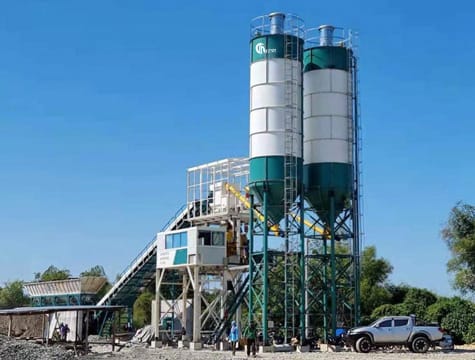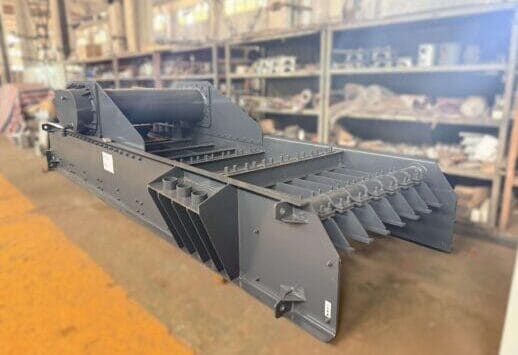
Aggregate bins are an important part of a concrete batching plant. They store different types or sizes of aggregates and provide a controlled supply of materials to the weighing and mixing system.
Choosing the right aggregate bins is not simply a matter of selecting the largest available capacity. The number of compartments, storage volume, aggregate characteristics, plant capacity, loading method, site layout, weighing system, and maintenance requirements all need to be considered.
The right configuration can help maintain a stable material supply, improve batching efficiency, and reduce unnecessary equipment and space costs.
Aggregate bins are storage compartments used to hold materials such as sand, gravel, crushed stone, and other aggregates before batching.
A typical system separates aggregates into different compartments according to material type or particle size. The material is then discharged through gates and transferred to the weighing system before entering the mixer.
Depending on the plant design, aggregate storage can use ground bins, compartment bins, in-line bins, or other configurations. The appropriate solution depends on the required capacity and site conditions.
The first step is to determine how many different aggregate materials your concrete recipes require.
For example, a basic mix may use:
In this case, a four-compartment aggregate bin system may be suitable.
However, projects with multiple concrete grades or different aggregate specifications may require additional compartments. Commercial batching plants commonly use several aggregate compartments, with configurations varying according to production requirements.
How many different aggregate types must be stored and batched independently?
The answer should determine the basic number of compartments.
Avoid selecting too few compartments simply to reduce the initial equipment cost. If different materials must be mixed together in one compartment, batching flexibility and concrete mix consistency may be affected.
Aggregate storage capacity should be considered together with the concrete batching plant’s production capacity.
A higher-capacity plant consumes aggregates faster, so insufficient storage can require frequent loader operation and material replenishment. On the other hand, excessive storage capacity can increase equipment size, foundation requirements, footprint, and investment.
For example, manufacturer specifications show that aggregate storage configurations can vary significantly even among plants with different production capacities. Putzmeister’s batching plant specifications, for example, list four aggregate compartments with different capacities for different plant sizes.
When selecting bin capacity, consider:
The objective is to provide enough aggregate storage to support the planned production without creating unnecessary idle inventory.
Different aggregates can have different flow characteristics.
Sand, gravel, crushed stone, and recycled aggregates may behave differently inside a storage bin. Moisture content, particle size distribution, shape, and fines content can affect material flow.
When selecting aggregate bins, consider:
The bin outlet, gate design, hopper angle, and discharge arrangement should be suitable for the material being handled.
For damp or fine materials, special attention may be required to prevent material from sticking or blocking the discharge opening.
Aggregate bins can be arranged in different configurations depending on the plant layout.
Ground-level bins are loaded directly by a wheel loader or other loading equipment.
Parmi les avantages, on peut citer :
They can be useful where sufficient ground space is available.
In-line and elevated configurations can provide larger storage capacity while integrating closely with the batching and conveying system.
They may be appropriate when:
Different manufacturers use different bin configurations depending on plant capacity and infrastructure.
The following video provides a visual reference for equipment selection and plant configuration. Review the footage to see how the featured equipment relates to your project requirements.
Watch the video: https://www.youtube.com/shorts/NCKZ-d4ltzs
The way aggregates are loaded into the bins has a direct impact on bin design and site layout.
Common loading methods include:
If a wheel loader is used, the bin opening and surrounding area should provide sufficient clearance for safe and efficient operation.
If conveyors are used, the bin arrangement should be compatible with the conveyor’s discharge position, capacity, and transfer height.
The loading method should therefore be decided before finalizing the aggregate bin configuration.
The total storage volume should provide a reasonable buffer between aggregate delivery and concrete production.
Consider the following questions:
For projects with reliable aggregate supply and frequent deliveries, very large bins may not be necessary.
For remote projects or plants with limited material delivery frequency, greater storage capacity may be useful.
Aggregate bins do not work independently. They form part of the aggregate batching system.
The bin configuration should be compatible with:
Accurate aggregate weighing is important because aggregate typically represents a major portion of the concrete mix by mass.
The selected bin and batching system should therefore provide stable material discharge and reliable weighing performance.
A complete batching system depends on the coordination of aggregate storage, weighing, conveying, and mixing. Watch the video below for a closer look at the equipment and system arrangement shown.
Watch the video: https://www.youtube.com/watch?v=1ZHgJF1Spck&list=PLjExDh-Ip2T-3q2rqSV649uKHa6CnVrTe
A good storage bin should allow aggregates to flow smoothly toward the discharge point.
Important considerations include:
If the outlet is poorly matched to the aggregate, problems such as bridging, blockage, irregular discharge, or material leakage may occur.
The discharge system should also be easy to inspect and maintain.
Aggregate bins can occupy a significant portion of a concrete batching plant’s footprint.
Before selecting the bin configuration, check:
The aggregate storage system should work together with the overall plant layout rather than being selected separately.
For more information, see:
Conception de l'agencement d'une centrale à béton : facteurs clés pour un fonctionnement efficace
Aggregate bins operate in an environment containing dust, moisture, and abrasive materials.
A suitable bin design should provide reasonable access to:
Regular cleaning is also important. Material buildup inside the bin can affect material flow and reduce effective storage capacity.
When comparing different bin designs, consider not only the initial purchase price but also how easy the equipment will be to inspect, clean, repair, and replace.
Aggregate bins must be designed to withstand the loads associated with stored materials and normal plant operation.
Depending on the project, engineering considerations may include:
The final structural dimensions, foundation design, anchor bolts, and loading limits should always follow the equipment manufacturer’s drawings and project-specific engineering requirements.
The lowest purchase price does not necessarily mean the lowest overall cost.
When comparing aggregate bin solutions, consider:
| Factor | What to Check |
| Number of compartments | Does it match the required aggregate types? |
| Storage capacity | Is it sufficient for planned production? |
| Loading method | Is it compatible with the loader or conveyor? |
| Discharge system | Is material flow stable? |
| Weighing system | Is batching accurate and reliable? |
| Site footprint | Does it fit the available space? |
| Maintenance | Are key components easy to access? |
| Structural design | Can it handle the required loads? |
| Future expansion | Can storage capacity be increased later? |
| Total cost | What are installation and operating costs? |
A properly selected system should balance production requirements, site conditions, investment, and long-term operation.
Before purchasing or specifying aggregate bins, check the following:
Local structural and safety requirements have been considered
Choosing the right aggregate bins is an important part of designing an efficient concrete batching plant.
The best configuration depends on several factors rather than a single capacity number. The number of aggregate types, storage requirements, plant output, material characteristics, loading method, weighing system, site layout, and maintenance requirements should all be evaluated together.
For a new concrete batching plant project, it is recommended to define the required concrete mix designs and production targets first, then select the aggregate bin configuration accordingly.
Runhang can help customers evaluate aggregate storage and batching requirements as part of a complete concrete batching plant solution.