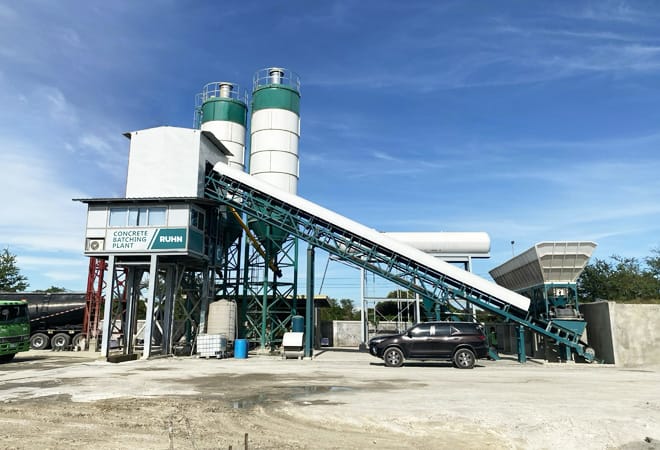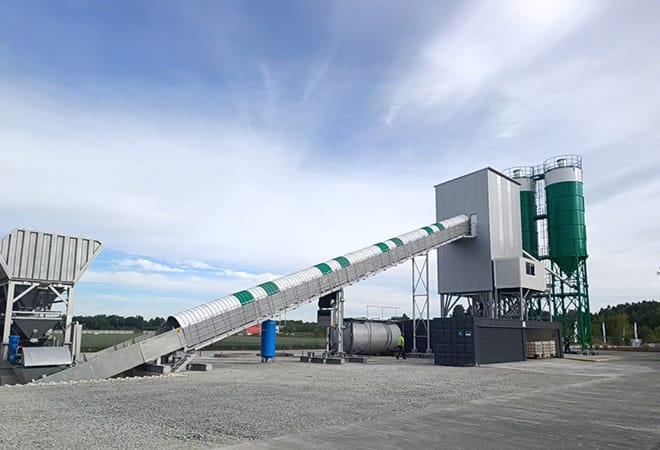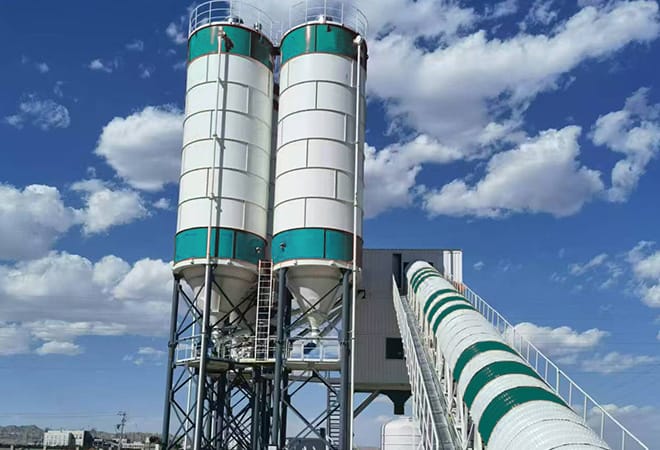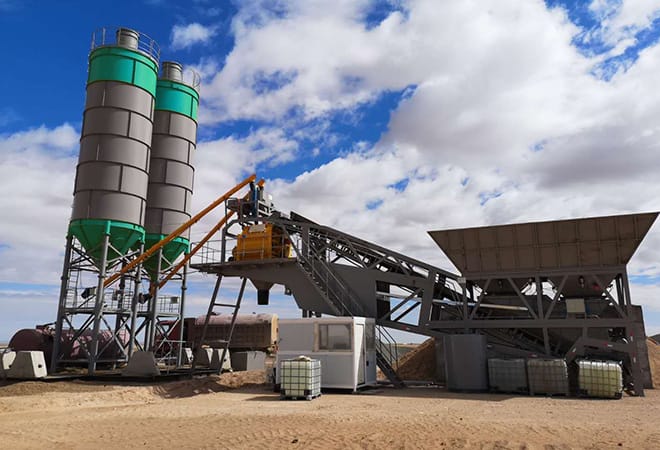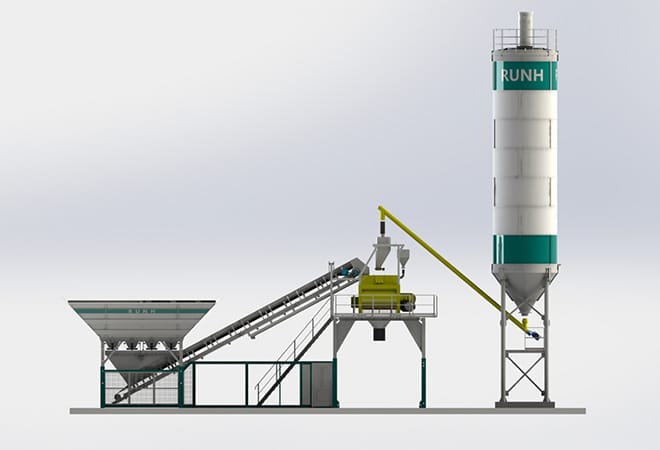
Cement silos are essential storage equipment in concrete batching plants, precast concrete plants, dry-mix mortar production lines, and other bulk powder handling systems. They are mainly used to store powdered materials such as cement, fly ash, and mineral powder and ensure a stable supply to downstream production processes.
Based on their structural design and installation method, cement silos can generally be divided into vertical cement silos и horizontal cement silos. These two types differ in terms of storage capacity, footprint, installation requirements, discharge methods, mobility, and suitable applications.
So, which is better for your project: a horizontal or vertical cement silo?
The answer depends on your production capacity, available space, project duration, installation conditions, and overall budget. This article compares horizontal and vertical cement silos to help you choose the right cement storage solution.
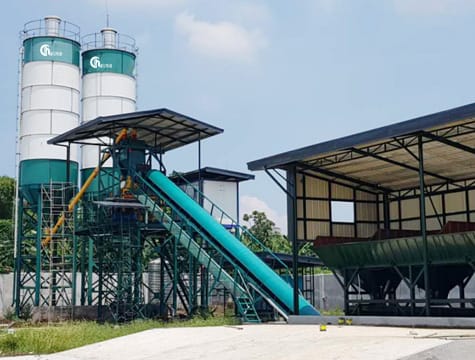
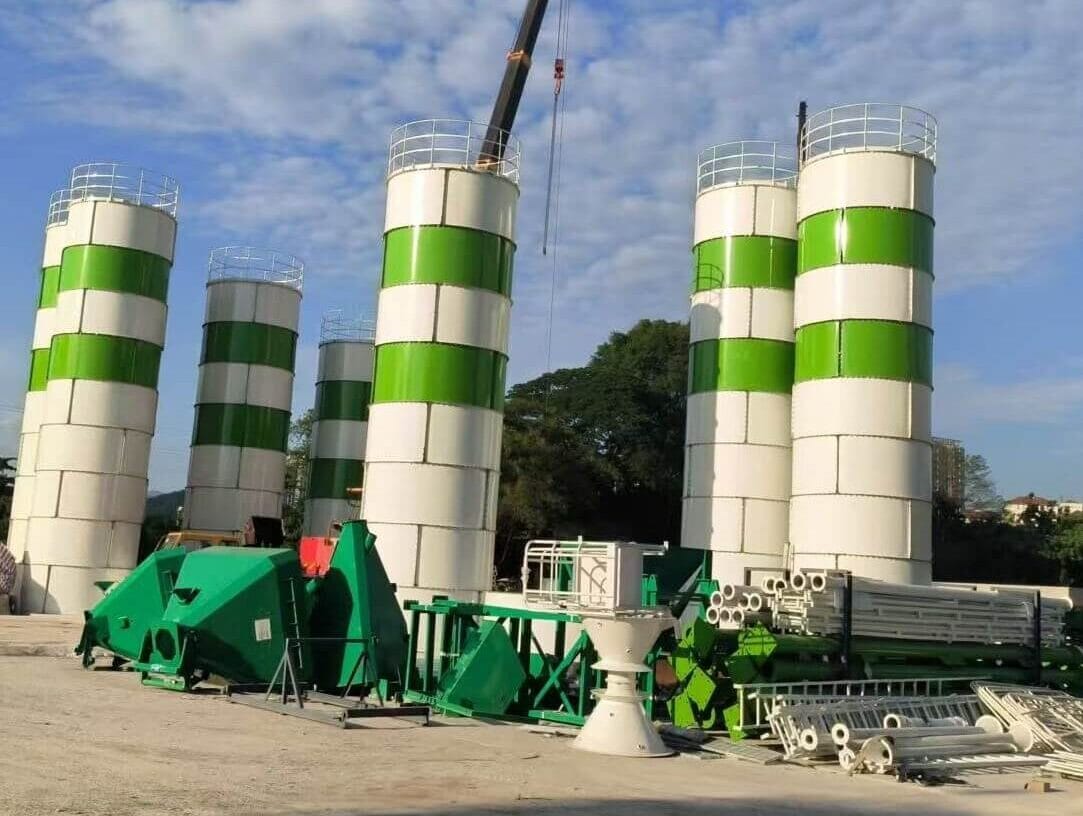
A vertical cement silo is one of the most commonly used storage solutions for bulk powder materials. It typically features a cylindrical body with a conical bottom and is installed on support legs anchored to a concrete foundation.
Cement and other powdered materials are loaded through the top inlet. The material then moves downward under gravity and is discharged through the bottom outlet, usually into a screw conveyor or other conveying equipment.
Key Features of Vertical Cement Silos
Because of these advantages, vertical cement silos are widely used in large concrete batching plants, precast concrete facilities, and industrial powder storage systems.
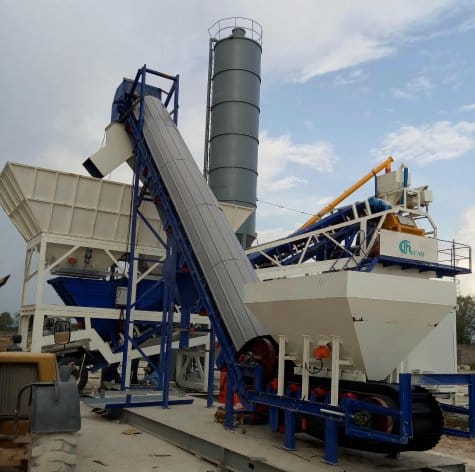
A horizontal cement silo has a low-profile design, with the silo body installed horizontally on a supporting structure. Compared with a traditional vertical silo, its overall height is significantly lower.
The main advantage of this design is its ability to operate in locations where site height or foundation conditions are restricted. Depending on the design, horizontal silos can also be more convenient for temporary or mobile applications.
Key Features of Horizontal Cement Silos
However, because the silo extends horizontally, it generally requires more ground space than a vertical silo with a similar storage capacity.
| Comparison | Vertical Cement Silo | Horizontal Cement Silo |
| Storage Direction | Vertical | Horizontal |
| Ground Footprint | Relatively small | Relatively large |
| Overall Height | Higher | Lower |
| Storage Capacity | Suitable for medium- to large-capacity storage | Generally suitable for smaller capacities or specific applications |
| Foundation Requirements | Requires a stable foundation and structural support | Generally more flexible depending on the design |
| Material Discharge | Gravity-assisted discharge through the conical bottom | Requires a suitable discharge and conveying system |
| Mobility | Mainly designed for fixed installation | Some designs are easier to relocate |
| Типичные области применения | Permanent batching plants and large industrial projects | Temporary, mobile, or height-restricted projects |
Available installation space is one of the first factors to consider.
A vertical cement silo uses height to increase storage capacity, so it generally requires less ground area. This makes it a good choice when the project has limited horizontal space.
A horizontal cement silo occupies more ground space because its storage body extends horizontally. However, its lower overall height can be an advantage where vertical clearance is limited.
In general:
Limited ground space → Consider a vertical cement silo
Limited installation height → Consider a horizontal cement silo
Before making a decision, measure not only the silo installation area but also the surrounding space required for transportation, maintenance, loading, and safety.
Storage capacity is another important consideration.
Large concrete batching plants often operate continuously and consume significant quantities of cement every day. For these applications, vertical cement silos are usually more suitable for high-capacity storage.
Horizontal silos may be more appropriate when the required storage capacity is relatively limited or when site conditions make a tall silo impractical.
When determining the required silo capacity, consider:
For more detailed guidance, see our article Как выбрать объём цементного силоса.
Installation conditions can significantly affect the choice between horizontal and vertical cement silos.
Vertical cement silos generally require a properly designed foundation and sufficient space for installation and lifting. Important factors include:
Horizontal cement silos can be advantageous when there are strict height restrictions, such as:
For any silo installation, proper structural design and safe installation procedures are essential. Read our guide Руководство по монтажу и технике безопасности цементных силосов for more information.
Vertical cement silos commonly use a conical bottom design. Powdered materials can flow downward under gravity and then enter a screw conveyor for transportation to the weighing or mixing system.
This makes vertical silos particularly convenient for integration with concrete batching plants and automated powder handling systems.
Horizontal silos require a suitable discharge and conveying system based on their specific design. Proper material flow must be considered to prevent excessive material accumulation inside the silo.
For powders that have poor flowability or are prone to caking, additional equipment may be required, such as:
Material flow problems can also affect the overall reliability of a cement storage system. For more information, see Распространенные проблемы с цементными силосами и способы их решения.
The expected project lifecycle is another important factor.
For permanent concrete batching plants designed for long-term operation, vertical cement silos are generally the more common choice because they provide high storage capacity while efficiently using ground space.
For temporary projects or applications where equipment needs to be relocated, installation and transportation flexibility become more important.
A horizontal cement silo may be worth considering when the project involves:
The final decision should consider both the initial installation requirements and the cost of relocating the equipment during the project lifecycle.
When choosing between a horizontal and vertical cement silo, it is important to evaluate the entire project rather than focusing only on silo capacity or purchase price.
First, determine the concrete batching plant’s required output, such as hourly production capacity and daily operating hours.
This information can then be used to estimate daily cement consumption and determine the required storage capacity.
Consider how frequently cement can be delivered to the site.
If cement deliveries are frequent and reliable, a smaller storage capacity may be sufficient. If transportation takes longer or delivery conditions are uncertain, additional storage capacity may be necessary to avoid production interruptions.
Measure:
The silo should also be coordinated with the overall layout of the batching plant.
The silo purchase price is only one part of the total investment.
Other costs may include:
Therefore, it is better to compare the total cost of ownership rather than simply choosing the silo with the lowest initial price.
Whether you choose a horizontal or vertical cement silo, appropriate auxiliary equipment is essential for safe and reliable operation.
Пылесборник
A silo-top dust collector helps filter dust generated during cement loading and reduces dust emissions around the silo.
Level Sensor
A level monitoring system allows operators to monitor material inventory and helps prevent both material shortages and overfilling.
Pressure Relief Valve
A pressure relief valve helps control abnormal pressure inside the silo and provides important protection for the silo structure.
Шнековый конвейер
A screw conveyor transports cement and other powder materials from the silo to the weighing or mixing system.
For more information, read What Is a Screw Conveyor and How Does It Work?
Runhang provides cement storage and conveying solutions for concrete batching plants, precast concrete production, dry-mix mortar plants, and other bulk powder handling applications.
Based on each project’s production capacity, storage requirements, site conditions, and operating environment, Runhang can provide suitable cement silo configurations together with:
By considering storage capacity, equipment layout, installation requirements, material flow, and future maintenance, Runhang helps customers develop efficient and reliable cement storage and conveying systems.
For projects requiring complete batching plant solutions, equipment selection should also be coordinated with the overall plant layout and production requirements.
There is no single cement silo design that is suitable for every project.
Choose a vertical cement silo when:
Consider a horizontal cement silo when:
Ultimately, the best choice should be based on storage capacity, production requirements, available space, installation conditions, project duration, material flow characteristics, and total project cost.
The right cement silo configuration can improve material storage efficiency, simplify powder conveying, reduce operational problems, and contribute to the long-term stable operation of the entire concrete production system.