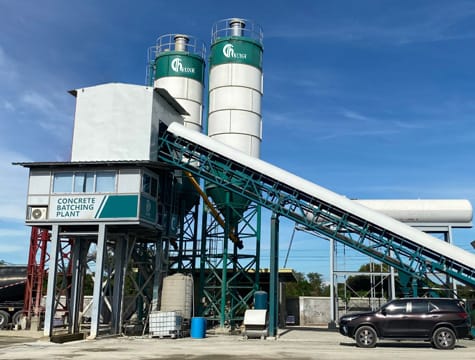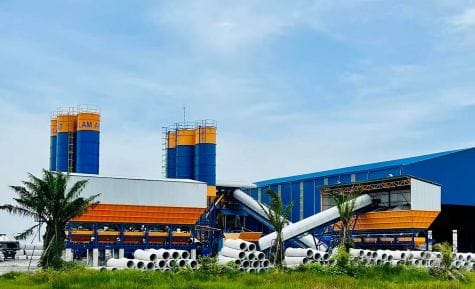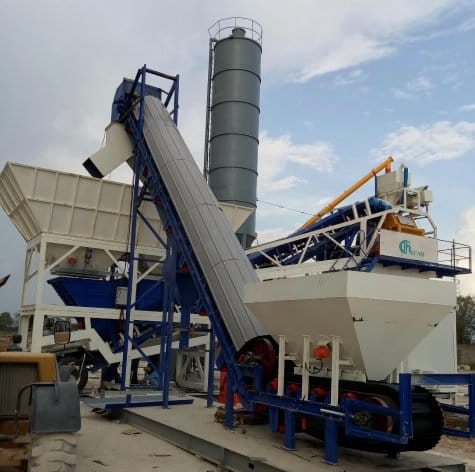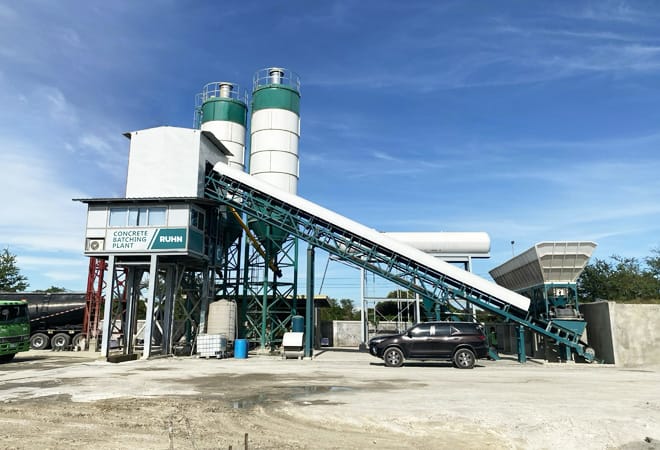
A well-designed concrete batching plant layout is essential for efficient material flow, safe operation, accurate batching, stable production, and convenient maintenance. The layout should coordinate aggregate storage, weighing, conveying, powder storage, mixing, truck loading, traffic routes, utilities, maintenance access, and environmental controls.
This article explains the key factors to consider when designing a concrete batching plant layout and how practical planning can improve operating efficiency and support future expansion.
A typical concrete batching plant follows four basic stages: loading, batching, mixing, and discharging. Aggregates are loaded and weighed, powders are stored in silos and metered, water and admixtures are dosed, and materials enter the mixer. After mixing, fresh concrete is discharged into mixer trucks.
The layout should follow this process as directly as possible and minimize unnecessary material movement.
Before positioning equipment, evaluate site dimensions, terrain, foundation conditions, access roads, drainage, power and water supply, surrounding structures, environmental requirements, and future expansion space. Compact sites may require a more modular arrangement, while long-term projects can reserve larger areas for aggregate storage, silo groups, vehicle routes, maintenance, and future equipment.
Рекомендуемые материалы:Как правильно выбрать производительность бетонного завода для вашего проекта
Material flow is one of the most important layout considerations. Aggregates, cement, fly ash, water, and admixtures should move through the plant with as few unnecessary transfers as possible. A logical flow can reduce conveyor length, unnecessary lifting, material accumulation, and waiting time.
Рекомендуемые материалы: Как рассчитать производственную мощность бетонного завода?
Aggregate bins should be positioned so wheel loaders can work efficiently and safely. The feeding area needs enough space for loading, maneuvering, and replenishment. Separate aggregate grades should be arranged to prevent cross-contamination and support accurate batching.
Cement and powder silos should be reasonably close to the weighing and mixing system to keep powder conveying efficient. Provide clearance for delivery vehicles, dust collectors, pressure-relief devices, level sensors, inspection, and maintenance. For multiple powders, the layout should make each material easy to identify and service.
The mixer and discharge area connects production with transportation. Mixer trucks should be able to enter, position, receive concrete, and leave without interfering with other traffic. Poor truck circulation can create queues and reduce plant utilization.
Where possible, keep mixer-truck routes, loader routes, maintenance access, and pedestrian paths clearly separated. Emergency access, fire protection, electrical equipment access, and safe working areas should remain unobstructed.
Mixers, conveyors, motors, reducers, weighing systems, filters, valves, and control equipment require regular inspection, lubrication, cleaning, and repair. Leave sufficient access around key components and practical cleaning routes for areas where concrete or aggregate can accumulate.
Dust collectors, silo filters, enclosed transfer points, and other environmental-control equipment should be integrated into the layout. Drainage should prevent rainwater from collecting around foundations, electrical equipment, aggregate storage, and traffic routes. If the project requires concrete washout or wastewater management, include these facilities in the site plan.
Mobile plants emphasize flexible deployment and relocation. Engineering plants are commonly configured for highways, railways, bridges, airports, and other engineering projects and may need adaptable layouts. Commercial plants generally prioritize stable high-volume production, larger storage, efficient truck circulation, and supporting facilities. Quick-install solutions prioritize fast deployment and practical site utilization.
Runhang Engineering Batching Plant uses modular design and can adapt to different sites, layouts, discharge directions, and powder silo groups. Current engineering models range from 60–180 m³/h theoretical productivity; the commercial range covers 120–300 m³/h.
Рекомендуемые материалы: Стационарная или мобильная бетонная установка: какая из них подходит именно вам?
A plant may later require additional aggregate bins, cement silos, conveyors, admixture systems, storage, or a second mixing line. If expansion is possible, reserve space and define connection points for utilities, foundations, conveyors, and control systems during the initial design.
Runhang provides modular and customized concrete batching plant solutions. Its engineering batching plant can adapt to different site conditions, layouts, discharge directions, multiple powder silo groups, and high-grade concrete production. The commercial batching plant also uses modular design and customized configurations for complex terrain and space restrictions.
A project-specific layout can be developed around production capacity, site conditions, material flow, storage requirements, installation method, truck circulation, maintenance access, and future expansion.
| Layout Factor | Key Question | Why It Matters |
| Material Flow | Can materials move from storage to mixing with minimal unnecessary transfers? | Reduces handling time and bottlenecks. |
| Aggregate Feeding | Can loaders safely feed all aggregate bins? | Supports stable batching and vehicle efficiency. |
| Powder Storage | Are silos accessible for filling, inspection and maintenance? | Improves material supply and serviceability. |
| Truck Circulation | Can mixer trucks enter, load and leave without conflicts? | Reduces queuing and improves utilization. |
| Maintenance Access | Can technicians reach key components safely? | Shortens inspection and maintenance time. |
| Safety | Are vehicle, pedestrian and emergency routes clearly separated? | Reduces operational risks. |
| Environment | Are dust control and drainage integrated? | Supports cleaner and more reliable operation. |
| Expansion | Is space reserved for future equipment or storage? | Makes capacity upgrades easier. |
An efficient concrete batching plant layout is the result of coordinated planning rather than simply arranging equipment within a site boundary. Material flow, site conditions, storage, truck circulation, maintenance access, safety, environmental controls, and future expansion should be considered together. A well-planned layout can reduce unnecessary movement, improve production efficiency, simplify maintenance, and create a safer working environment.