Stationary and mobile concrete batching plants serve different project requirements. Mobile plants emphasize flexibility, rapid deployment, and relocation, while stationary plants are generally better suited to long-term operation, high production demand, and commercial concrete supply.
Choosing a concrete batching plant is not simply a matter of comparing equipment prices. Project duration, concrete demand, site conditions, transport distance, installation requirements, and future plans all affect the right choice. Mobile plants are generally suited to fast deployment and relocation, while stationary plants are suited to long-term, continuous production.
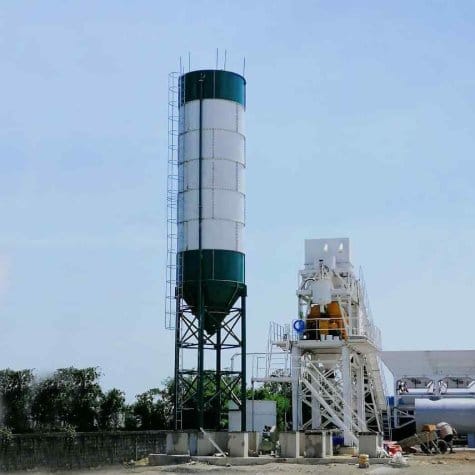
A mobile concrete batching plant is designed for flexibility and relatively fast deployment or relocation. Runhang Mobile Batching Plant has a theoretical productivity range of 25–120 m³/h. Key advantages include faster deployment, flexible relocation, and suitability for temporary, remote, or distributed projects.
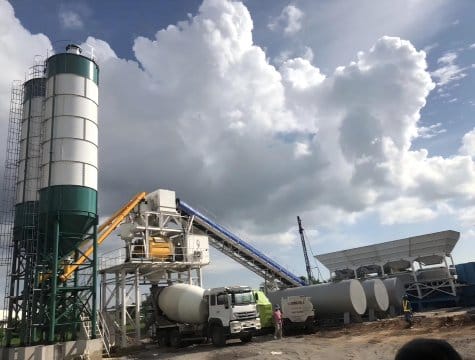
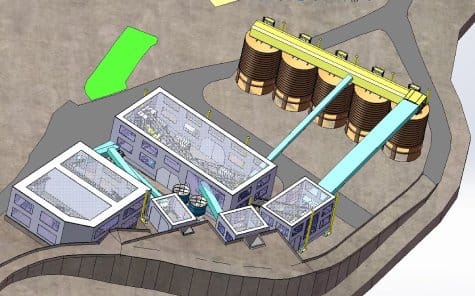
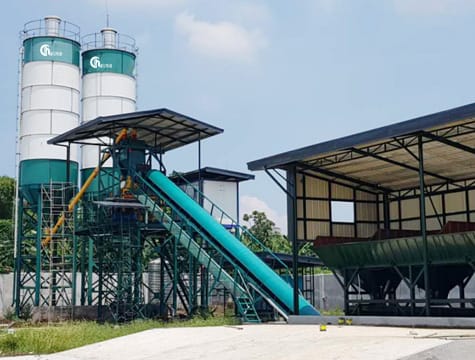
A stationary concrete batching plant is normally installed at a fixed location for long-term operation. Runhang Engineering Batching Plant has a theoretical productivity range of 60–180 m³/h for projects such as high-speed railways, highways, bridges, and airports. Runhang Commercial Concrete Batching Plant covers 120–300 m³/h and is designed for medium and large commercial concrete customers.
| Comparison Factor | Зөөврийн бетон зуургуудын үйлдвэр | Stationary Concrete Batching Plant |
| Project Duration | Well suited to short-term, temporary, phased, or relocation-heavy projects. | Better suited to long-term projects with a stable production location. |
| Production Capacity | Suitable for moderate production requirements and projects where flexibility is important. | Generally preferred for continuous, high-volume concrete production. |
| Installation & Relocation | Designed for faster deployment and easier relocation between suitable project sites. | Normally requires more site preparation and installation, but is optimized for long-term operation. |
| Site Requirements | More adaptable when the construction location may change. | Requires a stable site with suitable foundations and permanent infrastructure. |
| Storage & Configuration | Compact configurations can reduce site requirements for suitable projects. | Can be configured with larger aggregate and cement storage systems for continuous production. |
| Future Expansion | Expansion options depend on the plant configuration and project requirements. | Generally offers more flexibility for long-term storage, automation, and production expansion. |
| Ерөнхий хэрэглээ | Road construction, temporary works, remote projects, and phased construction. | Large infrastructure projects, ready-mix concrete production, and long-term commercial operations. |
The right choice depends on the project’s duration, production demand, site conditions, installation requirements, and future expansion plans.
A mobile plant may be a good choice for short projects, multiple relocation stages, remote construction sites, faster installation requirements, or projects with strong flexibility requirements. Road construction, temporary works, remote projects, and phased construction can benefit from mobile solutions.
A stationary plant is generally more suitable for long-term, stable, high-volume production, ready-mix concrete, large infrastructure projects, and operations requiring larger storage or future expansion.
Compare Total Cost of Ownership rather than only the initial price. Transportation, foundations, installation, commissioning, labor, maintenance, energy, relocation, and capacity utilization affect overall cost. A large stationary plant may not be economical for a short project, while an undersized mobile plant can create production pressure on a long-term project.
RunHang currently lists Mobile Batching Plants at 25–120 m³/h, Engineering Batching Plants at 60–180 m³/h, and Commercial Concrete Batching Plants at 120–300 m³/h. Capacity should be selected according to average demand, peak hourly demand, operating hours, mixer truck availability, and placing capacity.
Холбогдох уншлага: Төслийнхөө хувьд тохирох бетон зуурмагийн үйлдвэрийн хүчин чадлыг хэрхэн сонгох
Mobile plants offer an advantage when deployment and relocation are important. Stationary plants require a more stable site and foundation. For both options, assess access roads, equipment delivery, aggregate storage, cement silos, power, water, and concrete transportation routes.
RunHang provides Mobile, Engineering, Commercial, Quick-install, and Dual-purpose batching plant solutions. Equipment can be selected according to project scale, duration, site conditions, and production requirements. The Engineering Batching Plant uses modular design with factory pre-installation and modular site installation. The Commercial Concrete Batching Plant is designed for medium and large commercial concrete customers with efficient, precise, and intelligent production.
Choose Mobile when the project is short-term, relocation is required, on-site production is preferred, or rapid deployment and flexibility are priorities.
Choose Stationary when the project is long-term, continuous high-volume production is required, the operation is commercial concrete supply, or larger storage and expansion capability is needed.
There is no universal answer to whether a stationary or mobile concrete batching plant is better. The right solution depends on project duration, concrete demand, peak capacity, site conditions, transportation, installation, and future plans. Mobile plants generally suit rapid deployment and relocation, while stationary plants generally suit long-term, large-scale, continuous production.
Холбогдох уншлага: Бетон зуурмагийн үйлдвэрийн үнийн гарын авлага: үнийг юу нөлөөлдөг вэ?