Choosing the right concrete batching plant capacity is an important step in project planning. A plant that is too small may struggle with peak demand, while an oversized plant can increase investment and leave capacity underutilized.
This article explains how to calculate theoretical and practical production capacity, how peak demand and operating efficiency affect the result, and how to select a suitable Runhang plant.
Concrete batching plant capacity is normally expressed in m³/h. The basic calculation depends on batch volume and cycle time, while actual output also depends on material supply, transportation, maintenance, operator performance and site conditions.
The basic formula is:
Theoretical Capacity (m³/h) = Batch Volume (m³) × 3600 ÷ Cycle Time (s)
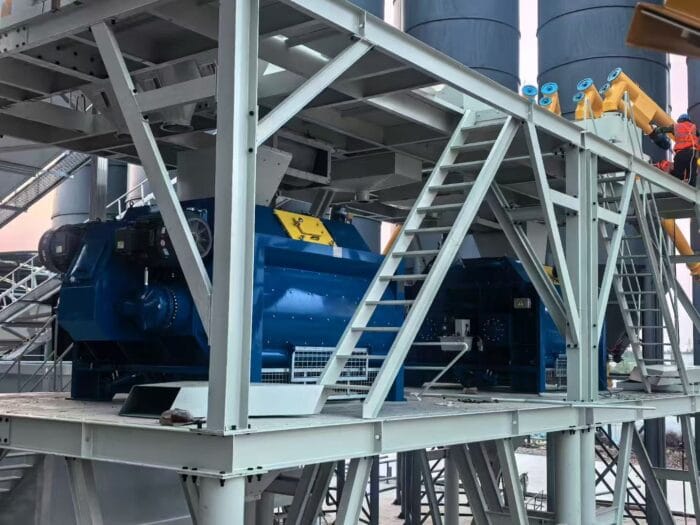
If a plant produces 4 m³ per cycle and one complete cycle takes 60 seconds, theoretical capacity is 4 × 3600 ÷ 60 = 240 m³/h. Runhang’s project information includes an HZS240 plant with a 4,000 L nominal mixer and a 60-second theoretical cycle, corresponding to 240 m³/h theoretical productivity.
Theoretical productivity assumes continuous operation under ideal conditions. Practical output should account for an operating-efficiency factor.
Actual Capacity ≈ Theoretical Capacity × Operating Efficiency
A 120 m³/h plant operating at an illustrative 80% effective utilization would produce about 96 m³/h. The 80% value is only a planning example; actual efficiency must be estimated from project conditions.
Start with actual concrete demand. For example, if a project needs 600 m³ during 10 effective production hours:
Average Demand = 600 ÷ 10 = 60 m³/h
Average demand alone is not enough. If pouring is concentrated into peak hours, plant selection should be checked against peak hourly demand.
A simple planning formula is:
Required Theoretical Capacity ≈ Peak Hourly Demand ÷ Expected Operating Efficiency
For example, 80 m³/h peak demand at 80% expected efficiency gives about 100 m³/h theoretical capacity. A 120 m³/h plant may then provide useful headroom, subject to truck and placement capacity.
Nominal mixer capacity and cycle time should be considered together.
| Example | Batch Volume | Cycle Time | Theoretical Capacity |
| A | 1.5 m³ | 60 s | 90 m³/h |
| B | 2.0 m³ | 60 s | 120 m³/h |
| C | 3.0 m³ | 60 s |
180 m³/h |
| D | 4.0 m³ | 60 s | 240 m³/h |
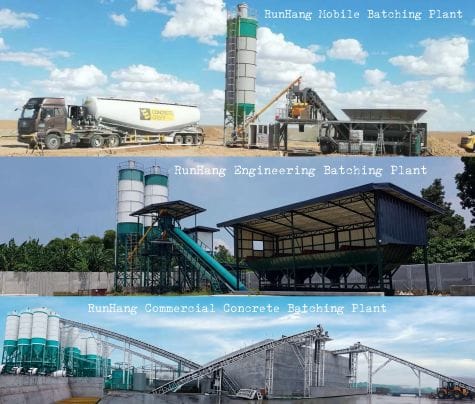
Runhang’s current product overview lists Mobile Batching Plants at 25–120 m³/h, Quick-install Mixing Stations at 25–90 m³/h, Engineering Batching Plants at 60–180 m³/h, and Commercial Concrete Batching Plants at 120–300 m³/h. These are theoretical ranges and should be matched to actual project conditions.
| Runhang Plant Type | Theoretical Productivity | Typical Application |
| Мобильная бетонная установка | 25–120 m³/h | Flexible or relocation-oriented projects |
| Станция смешивания с быстрой установкой | 25–90 m³/h | Quick-install and compact projects |
| Инженерная бетонная установка | 60–180 m³/h | Highways, railways, bridges, airports and engineering projects |
| Коммерческая бетонная установка | 120–300 m³/h | Medium/large ready-mix and continuous production |
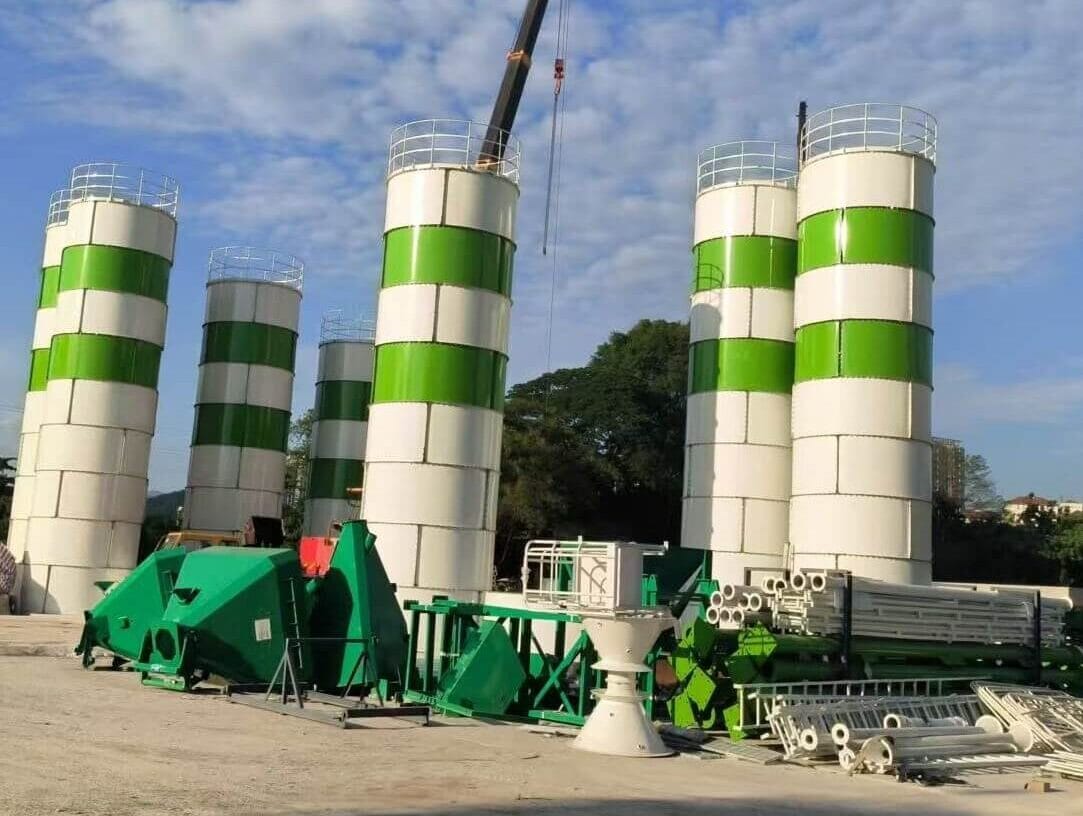
The mixer is only one part of the production chain. Aggregate bins, conveyors, cement silos, screw conveyors, weighing systems, water/admixture systems and discharge equipment must support the target rate. If a plant can theoretically produce 180 m³/h but material feeding or truck availability supports only 120 m³/h, 120 m³/h becomes the practical bottleneck.
Production, transportation and placing should be balanced. Estimate truck capacity, loading time, round-trip time, unloading time, traffic conditions and the concrete placing rate before finalizing plant capacity.
Assume a project needs 900 m³/day, has 10 effective production hours, and peak demand is 110 m³/h. At an illustrative 80% efficiency, the calculated theoretical requirement is about 137.5 m³/h. A 150–180 m³/h class plant can then be evaluated against truck availability, material supply and site conditions.
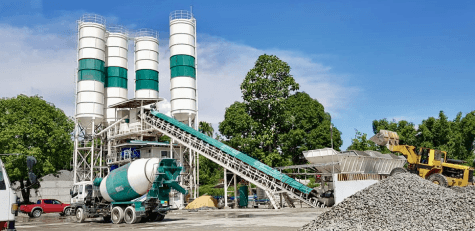
Runhang provides Mobile, Engineering, Commercial and Quick-install batching plant solutions. Equipment can be configured according to capacity, concrete type, site conditions, installation requirements and future expansion. Engineering plants use modular design and factory pre-installation; commercial plants are designed for medium and large commercial concrete customers with automated control and precise metering.