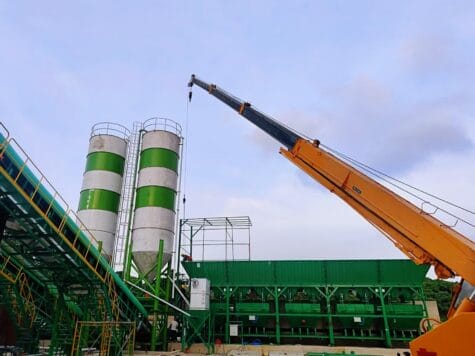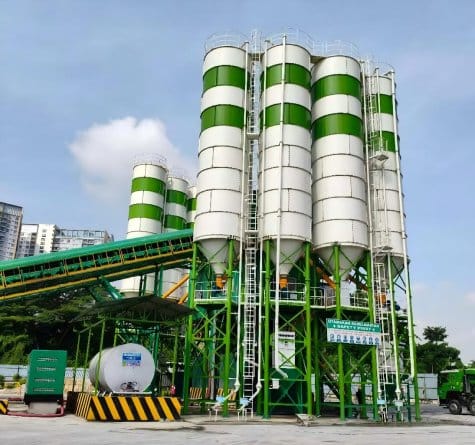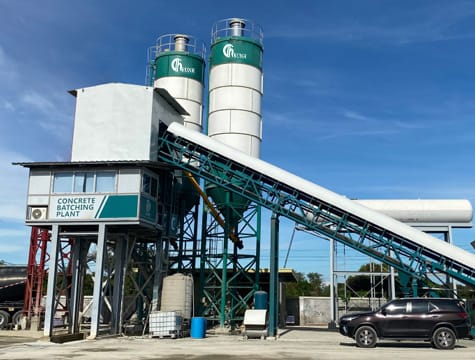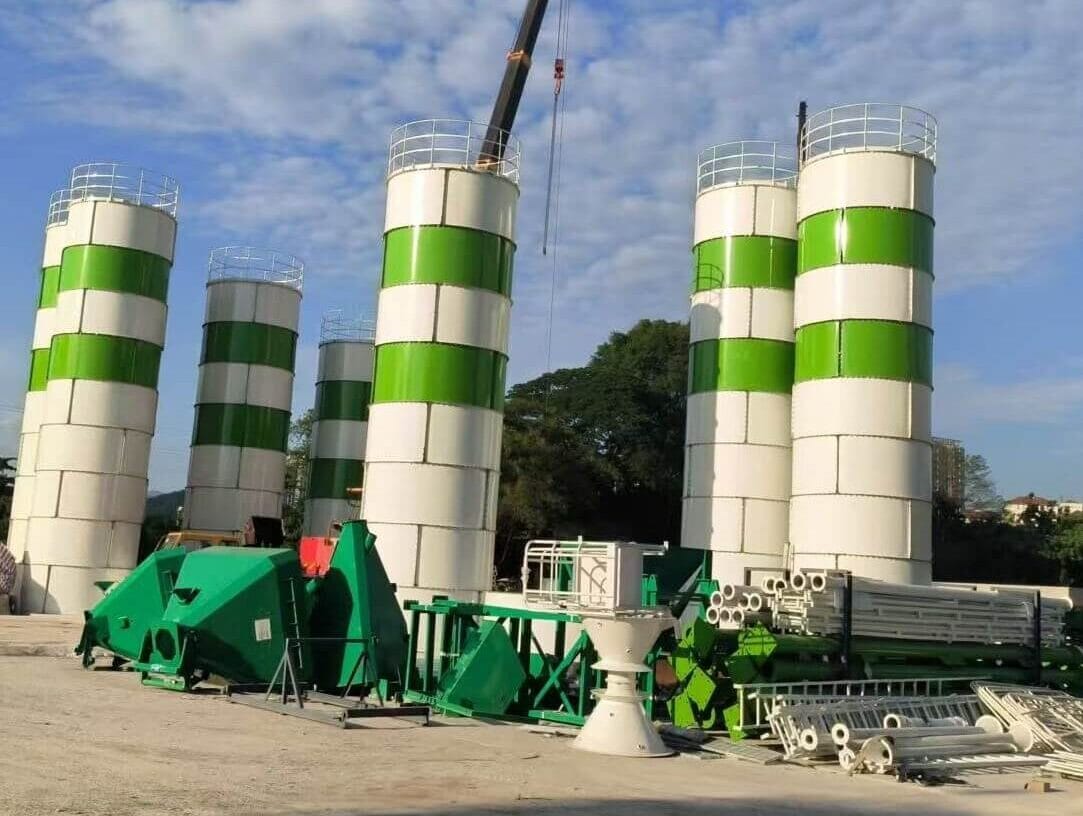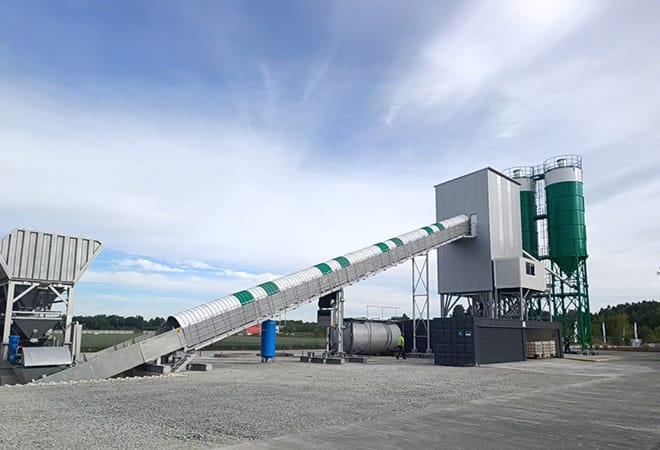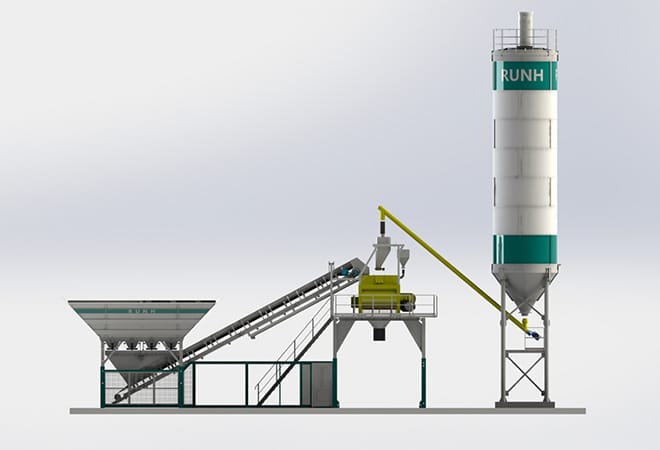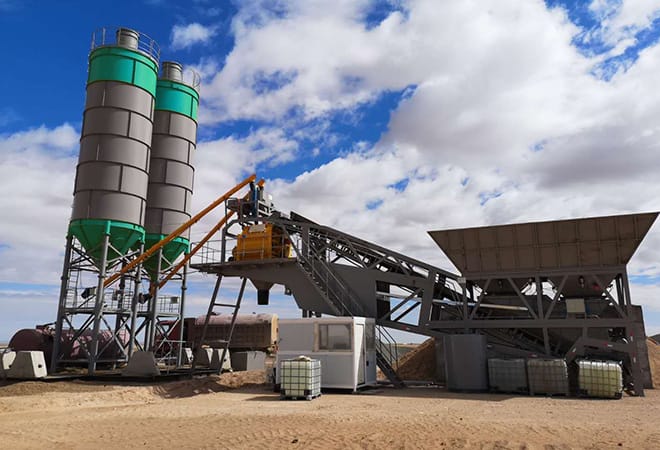
Mobile concrete batching plants are widely used in road construction, bridge projects, infrastructure development, and other temporary or multi-site construction projects. Their compact design, flexible installation, and easy relocation make them a practical solution when concrete production needs to move with the project.
However, compared with stationary concrete batching plants, mobile plants require additional safety considerations during transportation, installation, relocation, commissioning, operation, and maintenance.
Poor site preparation, unstable support, incorrect electrical connections, or failure to inspect and recalibrate the equipment after relocation can increase safety risks and affect concrete production quality.
Therefore, establishing standardized mobile concrete batching plant safety procedures is essential for protecting operators, reducing equipment failures, and maintaining stable production.
This article covers the key safety procedures for mobile concrete batching plants, from site preparation and installation to daily operation, maintenance, and relocation.
The main advantage of a mobile concrete batching plant is its flexibility. However, frequent transportation and installation also introduce additional safety considerations.
Each new project site may have different conditions, including:
For this reason, a mobile batching plant should not simply be restarted after being transported to a new location.
Before production begins, the equipment should be installed, inspected, connected, tested, and commissioned according to the manufacturer’s requirements.
Before the mobile concrete batching plant arrives at the construction site, the installation area should be carefully evaluated.
Key points to check:
The installation area should be kept away from unstable ground, deep excavations, drainage channels, and other areas that could affect equipment stability.
Pedestrian routes and vehicle routes should also be clearly separated wherever possible. This helps reduce the risk of collisions between operators, loaders, concrete mixer trucks, and other construction vehicles.
Transportation is an important safety stage for mobile batching plants.
Before transportation, confirm that:
After arriving at the new site, do not immediately start the equipment.
First confirm:
If the plant uses hydraulic deployment, outriggers, or other self-erecting mechanisms, operators should strictly follow the manufacturer’s specified sequence.
Personnel should stay away from hazardous areas while the equipment is being raised, unfolded, or adjusted.
After installation, inspect the overall stability of the mobile batching plant.
Pay particular attention to:
An unstable or improperly leveled batching plant may affect:
The permissible installation conditions and leveling requirements should always follow the equipment manufacturer’s specifications.
The electrical and control systems should be inspected after installation and after every relocation.
Check:
Before normal production begins, confirm that the motors rotate in the correct direction according to the equipment requirements.
Electrical faults should only be inspected or repaired by appropriately qualified personnel. Operators should not modify electrical circuits or control systems without authorization.
One of the most important safety and quality procedures for a mobile concrete batching plant is rechecking the weighing system after relocation.
Transportation can expose equipment to vibration and mechanical shock, which may affect:
After installation at a new site, inspect the weighing system and recalibrate it when necessary according to the equipment manufacturer’s requirements.
Do not begin full-scale production immediately after relocation without completing the necessary inspections and test runs.
For more information about concrete quality and batching accuracy, see our related article: What Factors Affect Concrete Quality in a Batching Plant?
Operators should conduct a complete inspection before starting the batching plant each day.
Mechanical System
Check:
Pneumatic and Hydraulic Systems
Check:
Check:
Any abnormal condition should be corrected before the equipment is started.
Once the mobile concrete batching plant is operating, operators should follow established operating procedures and avoid unnecessary intervention.
The feed rate should remain within the equipment’s rated capacity. Continuous overloading can increase wear on the mixer, conveyors, motors, and other components.
Operators should never:
Clear operating zones should also be established for:
Separating these traffic and working areas can significantly improve on-site safety.
For additional operating guidance, see Top 10 Safety Guidelines for Concrete Batching Plant Operators.
Cement, fly ash, and other powdered materials can generate dust during loading, storage, and conveying.
Operators should:
The cement silo and screw conveyor system should also be inspected regularly.
Important components include:
For more information, see Cement Silo Installation and Safety Guide.
Cleaning and maintenance should only be performed after the equipment has been safely shut down.
Before maintenance:
Particular attention should be paid when working around:
Daily maintenance should include inspection of:
For a more detailed maintenance routine, see Concrete Batching Plant Maintenance Checklist: Daily, Weekly, and Monthly Tasks.
When a project is completed or the mobile batching plant needs to be moved, relocation should be carried out according to a standardized procedure.
Before transportation:
After arriving at the new site, repeat the necessary procedures:
Site assessment → Equipment setup → Connection → Inspection → Calibration → Test run → Production
Previous successful operation does not eliminate the need for inspection after relocation.
Mobile Concrete Batching Plant Safety Inspection Checklist
| Inspection Item | Before Installation | Daily Before Startup | After Relocation |
| Site stability and leveling | ✓ | — | ✓ |
| Outriggers and support system | ✓ | ✓ | ✓ |
| Electrical connections and grounding | ✓ | ✓ | ✓ |
| Emergency stop devices | ✓ | ✓ | ✓ |
| Conveying system | ✓ | ✓ | ✓ |
| Mixing unit | ✓ | ✓ | ✓ |
| Weighing system | ✓ | ✓ | ✓ |
| Weighing system calibration | ✓ | — | ✓ |
| Cement silo and powder handling system | ✓ | ✓ | ✓ |
| Guards and safety devices | ✓ | ✓ | ✓ |
| Equipment test run | ✓ | — | ✓ |
The actual inspection frequency should be adjusted according to the equipment model, operating environment, production intensity, and manufacturer’s maintenance requirements.
In addition to the procedures above, several management practices can further improve safety.
Create written procedures covering:
Operators should understand the equipment structure, control system, emergency shutdown procedures, daily inspection requirements, and basic troubleshooting methods.
Record:
These records can help identify recurring problems and improve preventive maintenance planning.
This is especially important for mobile equipment. Mechanical connections, electrical systems, weighing systems, and safety devices should be rechecked before production resumes.
Runhang provides mobile concrete batching plant solutions for road construction, bridge projects, infrastructure development, and other applications requiring flexible concrete production.
The selection and configuration of a mobile batching plant should consider:
Runhang can provide equipment configuration and technical support based on specific project requirements, including equipment layout, installation and commissioning, operation guidance, maintenance support, spare parts, and after-sales service.
For mobile batching plants, safety depends not only on the equipment itself but also on proper site preparation, standardized installation, correct operation, regular inspection, and re-commissioning after relocation.
Safety management for mobile concrete batching plants should cover the entire equipment lifecycle, rather than focusing only on daily production.
From transportation and site preparation to installation, electrical connection, weighing calibration, production, maintenance, shutdown, and relocation, each stage requires appropriate inspection and safety procedures.
In particular, after moving the plant to a new construction site, operators should recheck the equipment’s stability, electrical connections, weighing system, conveying system, mixer, and safety devices before restarting production.
By establishing standardized mobile concrete batching plant safety procedures, providing proper operator training, and combining daily inspections with preventive maintenance, companies can reduce safety risks, minimize equipment downtime, and maintain more stable and efficient concrete production.