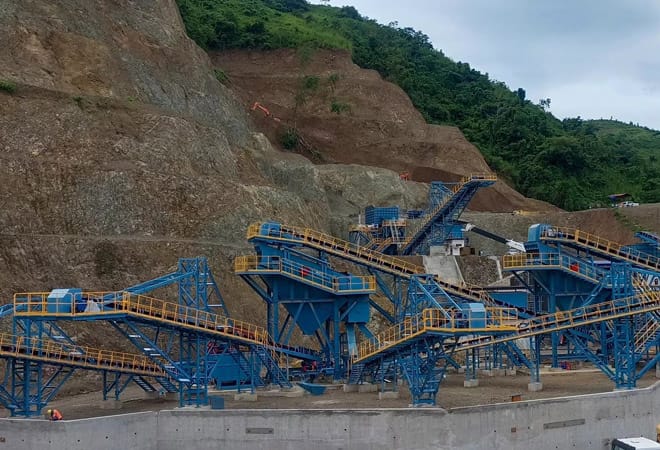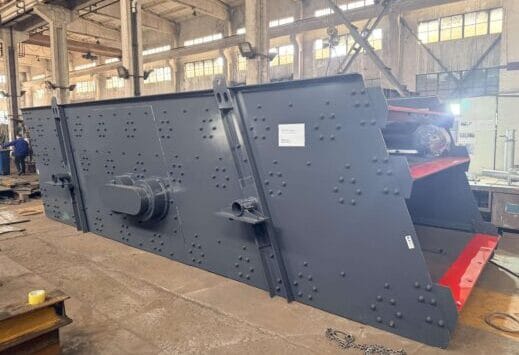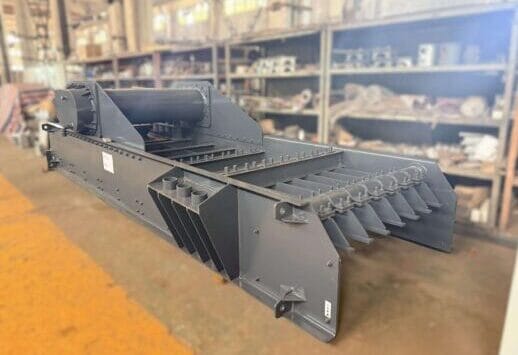
In aggregate production, mining operations, and construction waste recycling projects, the crushing process is typically divided into multiple stages. Among these, primary crushing and secondary crushing are the most critical steps in achieving the desired aggregate size and quality.
When planning a crushing and screening plant, many customers frequently ask:
In reality, these two crushing stages serve different purposes and work together to determine production capacity, aggregate quality, particle size distribution, and overall operating costs.
This article explains the key differences between primary and secondary crushing and provides guidance on selecting the most suitable crushing equipment for your project.
Primary crushing is the first stage of the aggregate crushing process. Its main purpose is to reduce large raw materials extracted from quarries or mines into smaller sizes suitable for further processing.
Common raw materials include:
Typical feed sizes range from:
After primary crushing, the material size is typically reduced to 100–300 mm.
Primary crushers are capable of handling large run-of-mine (ROM) materials directly from quarries or mining operations.
Large rocks can be quickly reduced to manageable sizes for downstream crushing stages.
Primary crushing equipment handles the main feed load of the entire crushing plant.
Equipment must withstand continuous impact loads and demanding working conditions.
The jaw crusher is the most widely used primary crusher in aggregate and mining applications.
Key advantages include:
Secondary crushing is the stage that further reduces and refines material after primary crushing to achieve the required product size and shape.
Its main purpose is to reduce the coarse material produced by the primary crusher into the final aggregate size required by the project.
For example:
Secondary crushing produces a more uniform particle size distribution and better aggregate shape.
Proper secondary crushing reduces the burden on downstream screening equipment.
Secondary crushing is commonly used to produce aggregates for:
Secondary crushing plays a crucial role in determining the final quality of aggregates. Well-shaped aggregates with low flakiness and elongation can reduce cement consumption and improve concrete strength in concrete batching plants.
Cone crushers operate based on the principle of lamination crushing, where materials are compressed, sheared, and bent between the moving mantle and the stationary concave.
Advantages include:
Impact crushers use a high-speed rotor equipped with blow bars to strike incoming materials. The material is repeatedly impacted against impact plates until the desired size is achieved.
Advantages include:
| Comparison Item | Primary Crushing | Secondary Crushing |
| Crushing Stage | Stage 1 | Stage 2 |
| Material Processed | Large raw rock | Material after primary crushing |
| Feed Size | 500–1500 mm | 100–300 mm |
| Output Size | 100–300 mm | 20–80 mm |
| Main Purpose | Reduce large rocks | Refine particle size and shape |
| Typical Equipment | Jaw Crusher | Cone Crusher / Impact Crusher |
| Equipment Load | High-impact, heavy-duty | Fine crushing and shaping |
More about: How to Choose the Right Crusher Type for Different Materials
Many newcomers to the crushing industry ask:
“Can a single crusher complete the entire process from raw stone to finished aggregate?”
In most cases, the answer is no. Multi-stage crushing is required for the following reasons:
The reduction ratio of a single crusher is usually limited to approximately 6:1 to 8:1.
For example, reducing 1500 mm raw stone directly into 10 mm aggregate would require a total crushing ratio of 150:1, which cannot be achieved efficiently by a single machine.
Different crushing methods are suitable for different material sizes.
Using one crusher for all stages results in higher energy consumption and lower productivity.
Different construction applications require specific aggregate gradations.
By combining staged crushing with screening equipment, operators can precisely control the proportions of finished aggregate products.
Primary crushers are designed to withstand large feed sizes and heavy impacts.
Secondary crushers focus on particle shaping and fine reduction.
Dividing these tasks among different machines significantly improves equipment reliability and service life.
When selecting crushing equipment, consider the following factors:
Recommended configuration:
Feeder → Jaw Crusher (Primary Crushing) → Cone Crusher (Secondary Crushing) → Vibrating Screen → Finished Aggregate
Recommended configuration:
Feeder → Jaw Crusher (Primary Crushing) → Impact Crusher (Secondary Crushing) → Vibrating Screen → Finished Aggregate
The finer the required final product, the more important a multi-stage crushing process becomes.
For example:
Feeder → Jaw Crusher → Cone Crusher / Impact Crusher → Vertical Shaft Impact (VSI) Crusher → Vibrating Screen → Manufactured Sand
(The VSI crusher is commonly used for tertiary crushing and particle shaping to produce high-quality manufactured sand.)
Learn more about crushing plant design and equipment selection:
كيفية تصميم محطة تكسير وغربلة فعالة
As a professional manufacturer of crushing and screening equipment, Runhang provides complete solutions for aggregate production, mining, and recycling applications.
Our product range includes:
Based on raw material characteristics, production requirements, and finished product specifications, رونهانغ delivers customized crushing solutions that help customers achieve higher productivity, superior aggregate quality, and lower operating costs.
Primary crushing and secondary crushing serve different but equally important functions in the aggregate production process.
Primary crushing reduces large raw materials into manageable sizes for further processing, while secondary crushing refines particle size and improves aggregate shape to meet project specifications.
By selecting the appropriate combination of crushers and configuring the crushing process correctly, operators can improve production efficiency, reduce operating costs, and produce high-quality aggregates for a wide range of construction and mining applications.