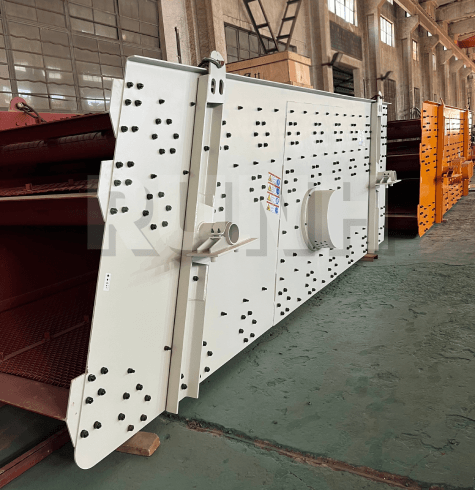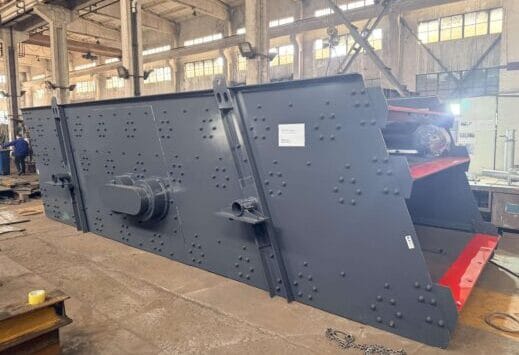
A vibrating screen is one of the most important pieces of equipment in a crushing and screening plant. It is mainly used to separate crushed materials into different particle sizes and directly affects the quality of finished aggregates, production capacity, and operating costs.
Because vibrating screens operate through continuous high-frequency vibration, the equipment is exposed to constant material impact, vibration stress, dust, and abrasive wear. Over time, critical components such as screen mesh, bearings, exciters, springs, and structural parts may experience wear or failure.
Without proper maintenance, vibrating screen problems may lead to:
Therefore, establishing a systematic vibrating screen maintenance program is essential to ensure reliable operation and extend equipment service life.
This article provides a practical vibrating screen maintenance checklist, covering daily inspections, weekly maintenance tasks, and periodic servicing recommendations to help operators improve equipment reliability and reduce downtime.
During operation, the exciter generates vibration force that drives the screen box to move continuously, allowing materials to pass through the screen surface according to particle size.
At the same time, repeated material impact and vibration loads gradually affect the equipment components.
Common factors that accelerate vibrating screen wear include:
Regular maintenance helps to:
A structured maintenance program should cover equipment inspection, lubrication, wear-part replacement, and regular performance checks. For a more comprehensive maintenance schedule, see our guide to Preventive Maintenance Plan for Crushing and Screening Plants.
The following components should receive special attention during vibrating screen maintenance.
The screen mesh is the main working component of a vibrating screen and is also one of the most frequently replaced wear parts.
Check the following:
Screen blockage, also known as screen blinding, can significantly reduce screening capacity and affect final product quality. If these problems occur repeatedly, operators should also review the causes and solutions discussed in المشاكل الشائعة في الغرابيل الاهتزازية وحلولها.
Maintenance Recommendations:
The exciter is the core component that generates vibration force.
Check:
A damaged or poorly maintained exciter may cause insufficient vibration force, resulting in poor screening efficiency.
Vibrating screen bearings operate under high-speed vibration and heavy loads, making them critical maintenance points.
Check:
Both insufficient lubrication and excessive lubrication can shorten bearing service life.
Springs support the screen box and absorb vibration transmitted to the supporting structure.
التفتيش:
Damaged springs can cause unstable movement and increase stress on the screen structure.
Daily inspections help identify potential problems before they develop into major failures.
During operation, monitor:
If abnormal conditions are detected, stop the equipment immediately for inspection.
Uneven feeding may cause:
Proper material distribution is therefore important for maintaining stable screening performance. In a complete production line, the vibrating screen should also be properly matched with the crusher, feeder, and conveyor system. Learn more about كيفية تصميم محطة تكسير وغربلة فعالة.
Check:
Whether the screen surface is blocked
Whether material is evenly distributed
Whether material accumulates in certain areas
Uneven feeding may cause:
Uneven screen wear
Increased bearing load
Reduced screening efficiency
Continuous vibration can gradually loosen bolts and connections.
التفتيش:
Loose components should be tightened immediately according to the recommended torque.
Weekly maintenance requires a more detailed inspection of key components.
Maintenance tasks include:
Proper lubrication helps prevent overheating and premature bearing failure.
Check:
A loose or damaged drive system can reduce vibration performance and screening efficiency.
التفتيش:
For highly abrasive materials such as granite or iron ore, inspections should be performed more frequently.
For highly abrasive materials such as granite or iron ore, inspections should be performed more frequently. Screen selection should also be based on the material characteristics and the required final product size, especially in multi-stage crushing processes involving primary and secondary crushing. For more information, see Primary Crushing vs Secondary Crushing: What’s the Difference?
Periodic maintenance should focus on structural inspection and replacement of critical wear parts.
Long-term vibration may cause fatigue damage.
Check:
Any cracks or deformation should be repaired immediately.
Regularly inspect:
Abnormal vibration may indicate problems with:
Replace components according to actual operating conditions:
Replacing worn parts before failure occurs helps prevent unexpected shutdowns.
Wet materials or materials containing clay can easily block screen openings.
Possible consequences:
Adding too much grease does not improve performance.
Over-lubrication may cause:
Never perform maintenance tasks while the vibrating screen is operating.
Prohibited activities include:
Always shut down the equipment and disconnect the power supply before maintenance.
Vibrating screens are usually integrated with belt conveyors, crushers, and feeders. Therefore, maintenance should not be limited to the screen itself. Operators should also follow appropriate Belt Conveyor Safety Guidelines for Operators when inspecting or maintaining connected conveying equipment.
Runhang provides complete crushing and screening solutions for mining, aggregates, construction waste recycling, and building materials industries.
Our equipment range includes:
Based on different materials, production requirements, and site conditions, Runhang provides customized screening solutions with optimized equipment configuration, wear-resistant components, and technical support.
Through proper maintenance procedures, regular inspections, and timely replacement of key components, customers can improve screening efficiency, reduce operating costs, and achieve long-term stable production.
Vibrating screen maintenance is not only routine equipment care but also an essential part of maintaining the reliability of an entire crushing and screening plant.
By following a structured maintenance program, including daily inspections, weekly servicing, and periodic component checks, operators can detect potential problems early, reduce downtime, improve screening performance, and extend equipment service life.
For mining and aggregate production projects, combining reliable equipment with scientific maintenance practices is the key to achieving safer, more efficient, and more economical operation.