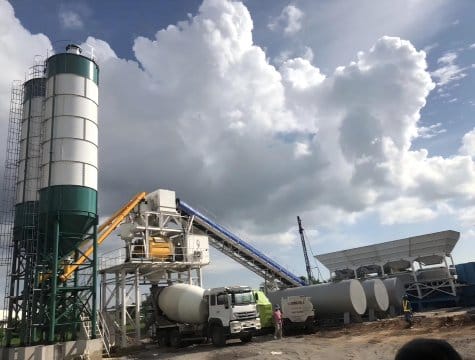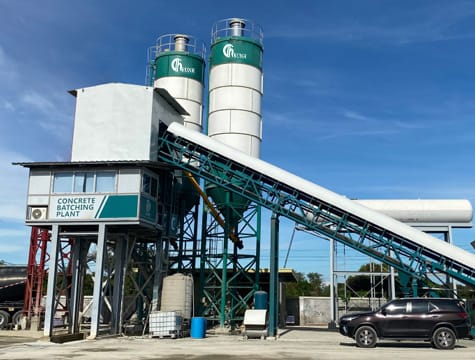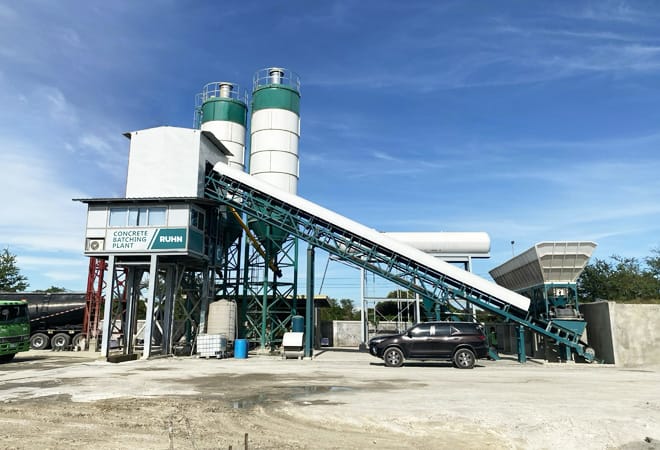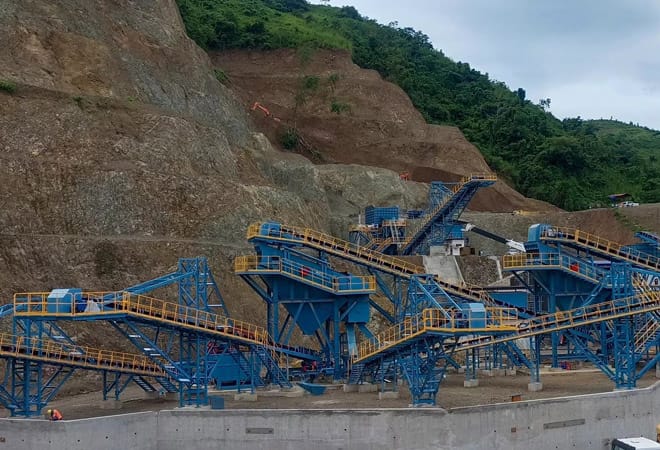
In concrete batching plants, aggregate production lines, mining operations, and building materials projects, belt conveyors are critical equipment determining production efficiency and stability. A properly selected belt conveyor can significantly enhance conveying efficiency while reducing energy consumption and maintenance costs. Conversely, improper selection may lead to frequent downtime, shortened belt lifespan, and unstable conveying.
As a manufacturer deeply rooted in station-type engineering equipment, Runhang has extensive experience in the long-term use and optimization of belt conveyors within systems like concrete batching plants, crushing lines, dry sand plants, and asphalt plants. This has cultivated profound engineering expertise in selection logic. Below, we combine industry best practices with Runhang engineering case studies to provide you with an efficient guide for selecting belt conveyors.

Material determines 70% of the conveyor belt’s design parameters, including belt material, incline structure, and idler type. The earlier the material is specified, the more accurate the selection and the longer the service life.
Recommended: Wear-resistant rubber belt, high-strength reinforcement layer, impact-resistant rollers
Runhang Application Scenarios: 120–250TPH crushing lines, aggregate conveying systems in ready-mix plants
Recommended: Anti-adhesion belt surface, automatic cleaners, densified rollers
Recommended: Anti-spillage structure, enclosed belt conveyors
Runhang Engineering Tip:
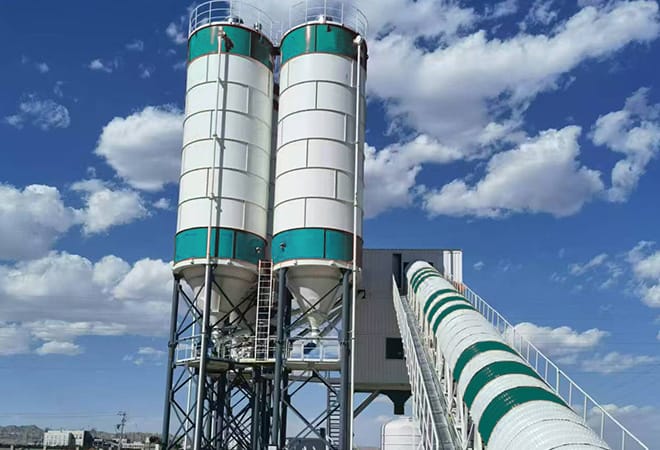
At mixing plant stockyards, we typically employ steep-angle belts with trough rollers. This ensures stable conveyance while preventing aggregate separation. It also minimizes dust leakage, enhancing environmental compliance.

Requirements for belt conveyors vary significantly across different construction sites. Therefore, Runhang always confirms environmental data before finalizing engineering solutions:
① Outdoor high-dust, heavy-duty applications (material yards/mines)
Rain covers, enclosed belt conveyors
Heavy-duty idlers, reinforced supports
Wear-resistant belts + multi-stage cleaners
② Extreme climates, particularly in Central Asia (e.g., Kazakhstan)
Runhang overseas projects frequently utilize:
-40°C cold-resistant rubber belts
Low-temperature oil seal idlers
Anti-freeze heating belts (optional based on requirements)
③ Space-constrained mixing plant structures
Inclined belts + compact steel frames
Modular design for easy installation and transportation
Runhang’s engineering experience demonstrates that environmental conditions and layout determine conveyor stability. Applying “generic conveyors” without considering operational realities significantly increases failure rates.
Belts are the core consumables of the entire conveying system and a key factor determining operating costs. Runhang primarily employs the following belt materials for different projects:
① Rubber Belt — Most commonly used in Runhang aggregate projects
✔ High abrasion resistance
✔ Impact resistance
✔ High strength, long service life
✔ Suitable for sand, gravel, aggregates, and minerals
Commonly used in Runhang 60–240m³/h ready-mix plants & crushing line conveying systems.
② PVC/PU Light-Duty Belt
✔ Lightweight
✔ Easy to clean
✔ Suitable for packaging, light industry, and clean environments
③ Special Custom Belts (Cold-Resistant/Heat-Resistant/Anti-Stick)
✔ Essential for extreme conditions
✔ Particularly suitable for projects in cold regions like Central Asia and Russia
✔ Suitable for light-duty, clean applications
✔ Easy to clean
✔ Smooth surface
(Used in packaging workshops or light industry conveying)

Runhang provides professional calculations based on system capacity during project design, including:
Runhang’s typical engineering configuration:
| Product Categories | Common Belt Widths | Common Conveyance Capacity | Configuration Features |
| 60–120m³/h mixing plant | 650mm | 150–300 t/h | Economical + High Stability |
| 180–240m³/h mixing plant | 800mm | 350–500 t/h | Heavy-duty continuous conveying |
| 100–250tph crushing line | 800–1000mm | Large Aggregate Conveying | High wear resistance, impact resistance |
Runhang Experience:
Belt “overload + prolonged full load operation” is the primary cause of reduced service life. Properly matching width and speed can significantly enhance stability.
Runhang has observed in global engineering projects:
“Choosing the right belt conveyor” saves more money than “buying a cheap one.”
The reasons are straightforward:
✔ Less downtime
✔ Higher efficiency
✔ Lower maintenance frequency
✔ Longer belt lifespan
✔ Reduced hidden costs (labor, spare parts, lost productivity)
Therefore, our configurations emphasize:
In Runhang’s overseas projects (Vietnam, Philippines, etc.), premium belt conveyors reduce maintenance by approximately 30–50%, significantly enhancing production stability.
Step 1: Define Material Properties (Most Critical)
Particle size, friction coefficient, moisture content, density, etc.
Step 2: Determine Environmental Conditions
Temperature, humidity, dust, water, space, climate.
Step 3: Confirm Conveying Capacity Requirements
Output (t/h), conveying distance, inclination angle, and layout configuration.
Step 4: Select Belt Material and Structure
Rubber belt/PVC/cold-resistant belt, steep-angle belt, trough idlers.
Step 5: Evaluate Maintenance & Service Life
Idler quality, cleaner, tensioning method, drive system, etc.
Runhang’s advantage lies not merely in manufacturing belt conveyors, but in fully integrating them into complete systems for:
✔ More Professional Turnkey Engineering Solutions
We don’t just sell conveyors—we customize solutions based on project requirements, delivering comprehensive conveying systems.
✔ High-wear resistance and high-reliability configuration
More stable, fewer failures, longer lifespan.
✔ Global engineering experience
Proven track record in diverse harsh environments, including Central Asia, Southeast Asia, and the Middle East.
✔ Project-specific customization
Tailored designs based on space constraints, production capacity, climate conditions, and more.