1. What Is a Concrete Batching Plant?
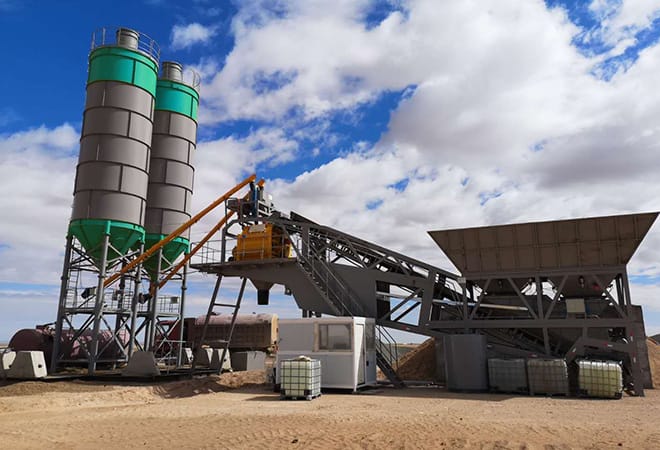
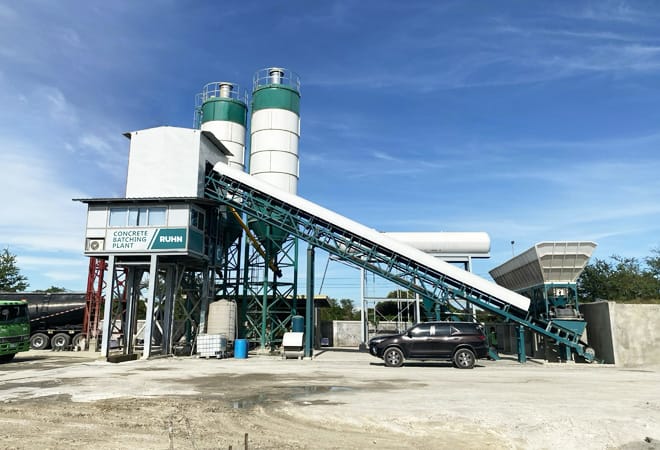
A concrete batching plant (also known as a concrete mixing plant) is a system used to combine raw materials to produce ready-mixed concrete. It includes multiple subsystems that handle material storage, weighing, mixing, and control.
Main Components:
Aggregate bins
Belt conveyor or skip hoist
Cement silos
Screw conveyors
Water and additive system
Concrete mixer
Control system
2. Types of Concrete Batching Plants
Concrete batching plants are available in various configurations, depending on their mobility, application, and production capacity.
(1) Stationary Batching Plant
Used for long-term and large-scale projects. Offers high productivity and stability.
(2) Mobile Batching Plant
Easy to transport and install; ideal for temporary sites or road construction.
(3) Dry Mix Plant vs. Wet Mix Plant
Dry Mix Plant: Mixes materials without water; concrete is mixed later by truck.
Wet Mix Plant: Completes the full mixing process before discharge.
3. How Does a Concrete Batching Plant Work?
Let’s look at the step-by-step process:

4. Why Batching Plants Matter?
Consistency: Ensures precise mixing ratios every time.
Efficiency: Saves time and labor with automation.
Quality Control: Real-time monitoring prevents material deviation.
Sustainability: Reduces waste and supports eco-friendly production.
A concrete batching plant is a complete, intelligent system that combines mechanical, electrical, and control technologies to produce high-quality concrete efficiently.
Understanding how it works helps you choose the right type for your project—whether it’s a mobile plant for roadwork or a stationary plant for large-scale construction.