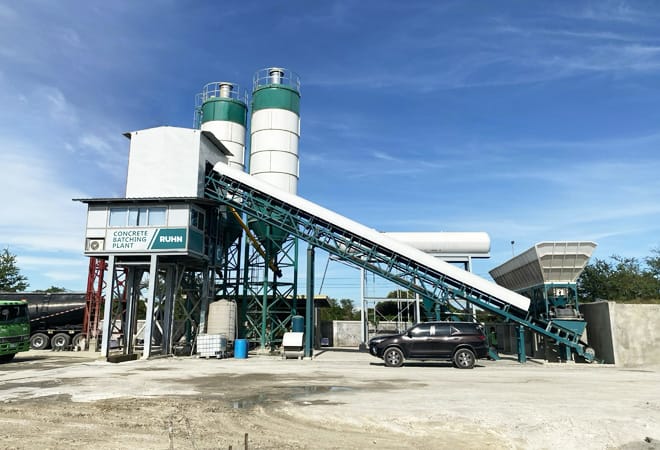
Installing a concrete batching plant successfully starts long before the equipment arrives at the jobsite. Proper site preparation provides the foundation for safe installation, smooth material flow, efficient production, and convenient maintenance.
Before construction begins, project teams should confirm the plant layout, foundation requirements, access roads, drainage, utilities, material storage areas, and installation space.
A detailed site preparation checklist can help identify potential problems before equipment delivery and reduce delays during installation.
Important: Foundation dimensions, structural requirements, anchor positions, electrical specifications, and other technical requirements should always be confirmed against the batching plant manufacturer’s approved drawings and project-specific engineering documents. Different plant configurations can have significantly different installation requirements. For example, some compact plants are designed for installation on prepared flat concrete surfaces, while other configurations require more substantial foundations.
The first step is to confirm the final concrete batching plant layout.
The layout should show the position of major equipment and supporting areas, including:
The layout should also consider how raw materials enter the site and how finished concrete leaves the plant.
A well-planned layout can reduce unnecessary vehicle movement and make equipment installation and future maintenance easier.
Related Reading: Concrete Batching Plant Layout Design: Key Factors for Efficient Operation
Before preparing the ground, confirm that the available site is large enough for the plant and its supporting operations.
Do not consider only the equipment footprint. Additional space may be required for:
A site can physically accommodate the main batching plant but still be unsuitable if trucks cannot move efficiently or maintenance areas are blocked.
Some compact batching plants are specifically designed for confined sites, demonstrating that site constraints can influence the plant configuration and layout.
Related Reading: How to Choose the Right Concrete Batching Plant Capacity for Your Project
Ground conditions should be evaluated before foundation construction.
The site assessment may include:
Heavy components such as mixers, silos, aggregate bins, and conveyor structures transfer loads to the supporting structure.
The required foundation solution depends on the specific plant design, equipment loads, local ground conditions, and applicable engineering requirements.
Therefore, the foundation should not be designed simply by copying dimensions from another batching plant.
Foundation preparation is one of the most important parts of site preparation.
Before concrete work begins, confirm:
All dimensions should be checked against the latest approved drawings.
Special attention should be given to anchor bolt positions. Small positioning errors can create significant problems when the equipment is installed.
For modular and compact plants, foundation requirements can be different from those of conventional stationary plants. Some compact models are designed to be installed on a prepared flat concrete surface, while other plants may require dedicated foundations.
The installation area should be properly prepared before equipment arrives.
Depending on the project design, site preparation may involve:
Uneven or poorly compacted ground can create problems with equipment positioning, drainage, vehicle movement, and long-term site stability.
The required compaction standard and surface tolerances should be determined by the project engineer and equipment foundation design.
Aggregate storage is an important part of the batching plant site.
Before installation, determine where sand, gravel, crushed stone, and other aggregates will be stored.
The aggregate area should provide:
The route from aggregate storage to the batching system should be considered together with the plant layout.
If a wheel loader is used, enough operating space should be provided for loading, turning, and reversing.
A batching plant cannot be installed efficiently if heavy equipment cannot reach the site.
Before delivery, check the complete transportation route.
Consider:
Large components such as cement silos, mixer structures, conveyors, and aggregate bins may require special transportation arrangements.
The installation plan should therefore be coordinated with the logistics plan before equipment is shipped.
The site should provide separate or logically organized routes for different vehicles.
Typical vehicle movements include:
Mixer trucks should be able to enter the loading area, position themselves under the discharge point, receive concrete, and leave without unnecessary reversing or blocking other operations.
The truck queue area should also be considered.
A well-planned traffic route can reduce congestion and improve overall plant operation.
Electrical infrastructure should be prepared before commissioning.
Depending on the plant configuration, electrical planning may include:
The power supply must meet the electrical requirements specified for the actual plant.
Cable routes should be planned before foundations and equipment installation are completed so that cables do not interfere with equipment structures or maintenance access.
Electrical installation and commissioning should be carried out by qualified personnel according to applicable local requirements and the manufacturer’s documentation.
Water is essential for concrete production, equipment cleaning, and site management.
Before installation, confirm:
Drainage is especially important because the site may receive rainwater as well as water generated during equipment cleaning.
The site should prevent uncontrolled water accumulation around foundations and equipment.
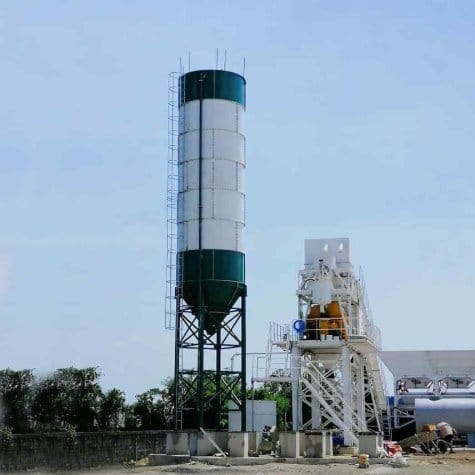
Cement silos require sufficient installation and operating space.
Before installation, confirm:
The silo location should also be coordinated with the overall material flow.
For plants with multiple cementitious materials, sufficient space should be provided for each silo and its associated conveying equipment.
Related Reading: Cement Silo Installation and Safety Guide
Environmental considerations should be addressed during site preparation rather than after installation.
The site plan should consider:
Dust-control equipment should have enough space for installation, inspection, and maintenance.
The environmental requirements will vary according to the project location and applicable regulations, so local requirements should be reviewed before construction begins.
Site preparation should include permanent access for operation and maintenance.
Provide appropriate space for:
Maintenance access should not be treated as leftover space after the equipment has been positioned.
The location of inspection doors, motors, gearboxes, filters, mixer access points, and other service components should be considered during layout planning.
Before equipment arrives, confirm how each major component will be unloaded and installed.
The installation plan may require:
The lifting capacity and working radius should be suitable for the actual equipment and site conditions.
The lifting area should be kept clear during installation, and lifting operations should follow the approved method statement and applicable safety requirements.
Before installation begins, check the delivered equipment against the packing list and project documents.
Verify:
Missing components can delay installation even when the main equipment has already arrived.
A receiving inspection should therefore be completed before assembly starts.
Before equipment installation begins, the project team can use the following checklist:
| Item | Key Check |
| Plant layout | Final layout approved? |
| Site dimensions | Enough space for equipment and operation? |
| Ground conditions | Soil and site conditions evaluated? |
| Foundation | Built according to approved drawings? |
| Anchor bolts | Position and elevation verified? |
| Site level | Installation area properly leveled? |
| Aggregate area | Storage and loader routes prepared? |
| Access roads | Heavy equipment can reach the site? |
| Truck traffic | Loading and delivery routes organized? |
| Power supply | Electrical capacity and connection prepared? |
| Water supply | Production and cleaning water available? |
| Drainage | Rainwater and wash water managed? |
| Cement silos | Foundations, access, and connections ready? |
| Dust control | Dust collection provisions prepared? |
| Maintenance | Service access available? |
| Safety | Installation and emergency access prepared? |
| Lifting | Crane and lifting plan confirmed? |
| Equipment | Delivered components checked? |
Concrete batching plant installation starts with proper site preparation.
A successful installation requires more than completing the equipment foundation. The project team should consider site conditions, layout, foundation, aggregate storage, transportation access, truck traffic, electricity, water, drainage, environmental control, maintenance access, and installation safety as one integrated plan.
The exact requirements will depend on the batching plant type, capacity, equipment configuration, site conditions, and local regulations. Manufacturer drawings and project-specific engineering documents should therefore be used as the primary reference for foundation and installation work.
Preparing these items before equipment delivery can help reduce installation delays, avoid costly modifications, and create better conditions for long-term plant operation.
Runhang provides concrete batching plant equipment and customized solutions for different project requirements. From plant configuration and layout planning to equipment delivery and installation support, proper preparation can help establish a more efficient and reliable concrete production site.