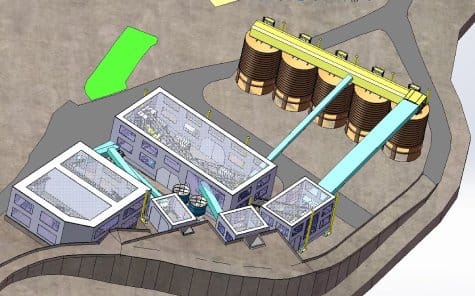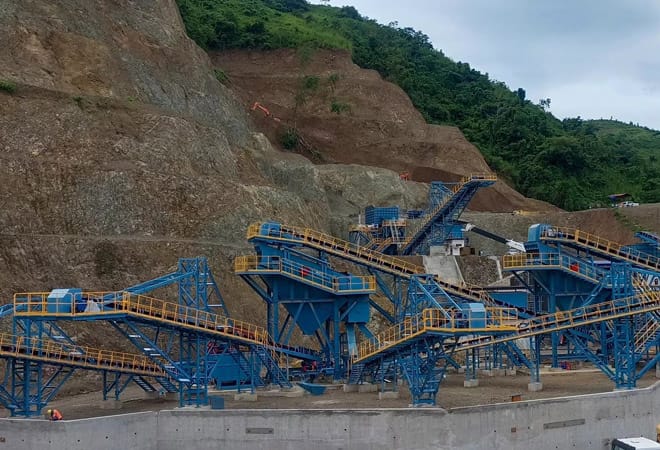
In mining, quarrying, and construction aggregate production, the feeder is one of the key pieces of equipment in a crushing production line. Its primary function is to deliver raw materials to the crusher in a uniform and continuous manner, ensuring the stable operation of the entire production line.
Inappropriate feeder selection may result in:
Therefore, selecting suitable feeding equipment is paramount when designing crushing production lines. This article outlines how to choose the appropriate feeder type based on production requirements.
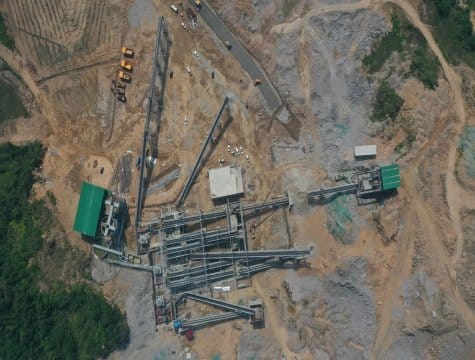
In a typical crushing production line, feeders are usually installed between the storage silo and the primary crusher. Their primary functions include:
Prevents material from entering the crusher in large quantities instantaneously, thereby avoiding blockages.
Adjusts production capacity by regulating feed rate.
Certain feeders can sift out fine material before it enters the crusher, enhancing crushing efficiency.
If you are planning a complete production line, you may also wish to consult our previous article: How to Design an Efficient Crushing and Screening Plant to understand the overall design approach for crushing and screening systems.
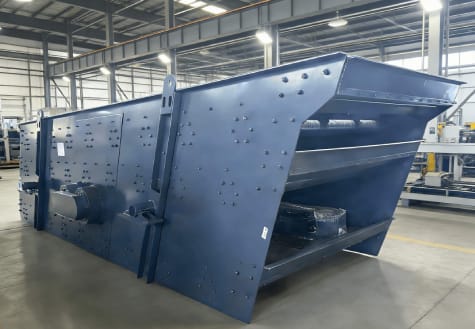
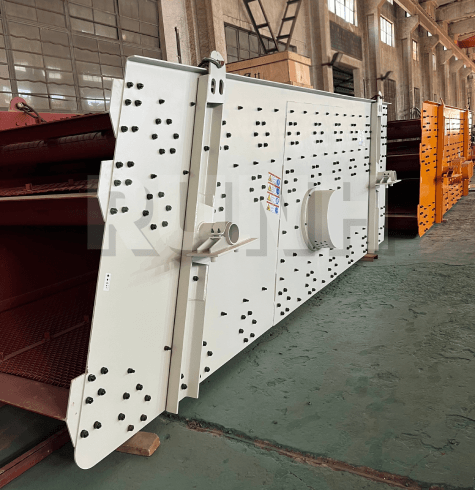
The vibrating feeder is the most commonly used equipment in mining crushing production lines.
Suitable applications:
Runhang employs heavy-duty vibrating feeder designs in numerous large-scale crushing projects, ensuring stable operation even under high-load conditions.
The apron feeder is suitable for large-scale mining operations or exceptionally heavy materials.
Features:
Applicable materials:
Typically employed upstream of large jaw crushers.
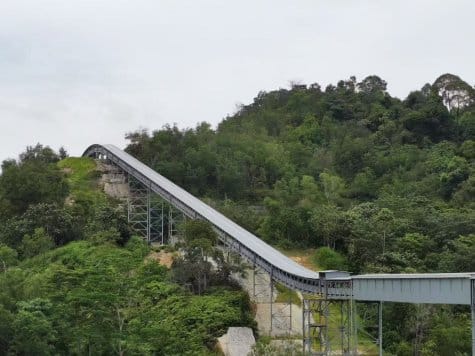
Belt feeders are primarily used for the continuous and stable conveyance of materials.
Features:
However, they are not well-suited for ore with a significant impact.
For further guidance on selecting conveying equipment, please refer to this article:
How to Choose the Right Belt Conveyor for Your Project
Different materials impose varying demands on equipment, such as:
For instance, large granite blocks typically require heavy-duty vibrating feeders or belt feeders.
The feeder capacity must be matched to the entire crushing production line.
For example:
Insufficient feeding capacity will directly impact the overall production output.
Different crushers have distinct requirements for feeding methods, for example:
If you are selecting crushing equipment, you may wish to read:
How to Choose the Right Crusher Type for Different Materials
Many vibrating feeders can be equipped with bar screen structures to pre-screen out fine material.
Advantages:
Mining equipment typically operates in high-dust, high-impact environments, necessitating:
When designing crushing production line equipment, Runhang places particular emphasis on equipment stability and maintenance convenience, helping customers reduce long-term operational costs.
Generally, the following configurations may be considered:
| Production line scale | Recommended Feeder |
| Small crushing station | Vibrating Feeder |
| Medium-sized quarry | Heavy-Duty Vibrating Feeder |
| Large-scale mining operation | Plate Feeder |
Correct equipment configuration not only impacts output but also directly affects the stability of the entire production line.
Although feeders are not the most conspicuous equipment in a crushing production line, they are crucial to the stable operation of the entire system.
When selecting a feeder, the following factors must be comprehensively considered:
Through appropriate equipment selection, the efficiency and stability of the crushing production line can be significantly enhanced.
As a specialist mining equipment manufacturer, Runhang is dedicated to providing comprehensive solutions for global clients, including:
Should you be planning a new mining or aggregate production project, we invite you to contact the Runhang team. We shall provide you with a professional equipment configuration proposal.