In mining operations, aggregate production, and crushing and screening systems, belt conveyor systems serve as vital material bridges connecting crushers, screening equipment, and even finished product stockpiles. They directly influence material flow, operational efficiency, and overall production costs.
As a manufacturer with extensive experience in providing comprehensive solutions for crushing and screening production lines and material conveying systems to global clients, Runhang is frequently asked during project discussions:
Which is more suitable for my mine or crushing production line: fixed belt conveyors or mobile belt conveyors?
This article will draw upon Runhang’s practical application experience in mining and aggregate projects to assist you in making a clearer choice, examining aspects such as operating modes, system stability, cost structure, and suitable operating conditions.
(For an overview of the role of belt conveyors in the mining and construction industries, please refer to the relevant articles by Runhang: The Role of Belt Conveyors in Mining and Construction.)
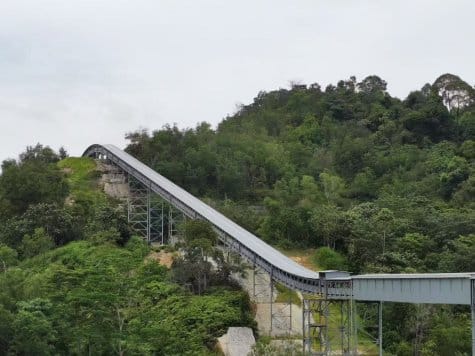
Fixed belt conveyors are typically installed on concrete foundations or steel support structures, representing a common configuration in stationary crushing production lines and long-term mining projects.
Application:
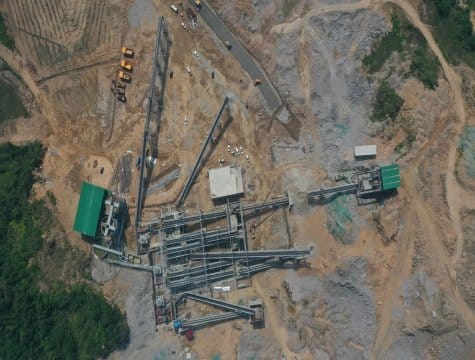
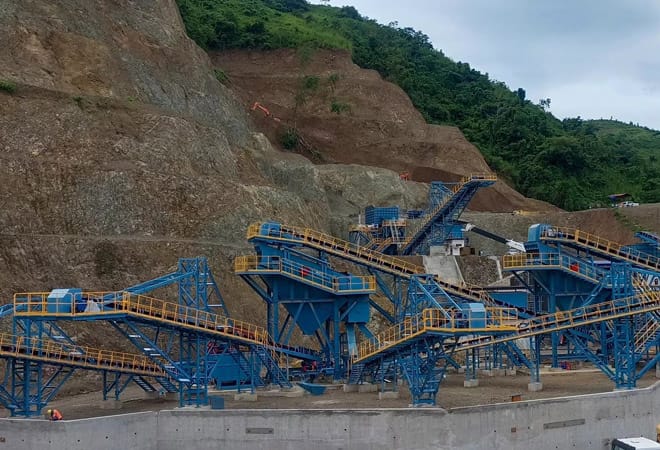
In the numerous mining and aggregate production lines designed with Runhang’s involvement, fixed belt conveyors typically serve as the primary conveying system, linking crushing, screening, and finished product stockpiling operations. They are particularly well-suited for continuous operation projects with capacities exceeding 300 tonnes per hour.
Mobile belt conveyors are typically fitted with tyre or crawler undercarriages, enabling flexible repositioning according to site requirements and placing greater emphasis on on-site adaptability and deployment efficiency.
Application:
In projects where operating conditions change rapidly, Runhang employs mobile belt conveyors for raw material transfer or phased production requirements, thereby enhancing overall construction efficiency.

Based on Runhang‘s experience, the longer the project’s operational cycle, the greater the demand for system stability, and the more pronounced the advantages of fixed solutions become.
Fixed belt conveyors offer greater advantages in terms of belt width, belt speed, and conveying distance, capable of meeting high-load operational requirements.
Mobile belt conveyors are more suitable for medium to short-distance conveying, with a relatively limited adaptability range for throughput.
Therefore, in high-capacity crushing production lines, Runhang typically employs fixed conveyors as the primary transport system, supplemented by mobile equipment at specific locations.
Fixed Solution:
Mobile Solution:
During the scheme design phase, Runhang comprehensively considers equipment procurement, installation timelines, and subsequent operational maintenance costs to assist clients in selecting more cost-effective conveying solutions.
Fixed belt conveyors feature a relatively simple structure, with maintenance primarily involving routine inspections and replacement of wear parts.
Mobile belt conveyors, owing to their walking mechanisms and hydraulic systems, demand higher standards of daily maintenance and management.
For Fixed Belt Conveyors
For Mobile Belt Conveyors
In certain projects, Runhang also employs a combined fixed and mobile conveyor system solution based on actual requirements, enhancing overall flexibility while ensuring stability.
※In consulting on crushing and conveying system projects for Runhang, we typically advise clients to conduct assessments according to the following steps:
This approach to system selection not only avoids over-engineering equipment but also maximises the overall operational efficiency of the system.
There is no single definitive answer regarding fixed versus mobile belt conveyors.
A truly efficient conveying system stems from a comprehensive assessment of the project timeline, production capacity requirements, and on-site conditions.
Based on Runhang‘s engineering practice, thoroughly considering the configuration of the conveying system during the production line planning stage can effectively prevent subsequent adjustments and unnecessary expenditure, ensuring the project’s long-term stable operation.