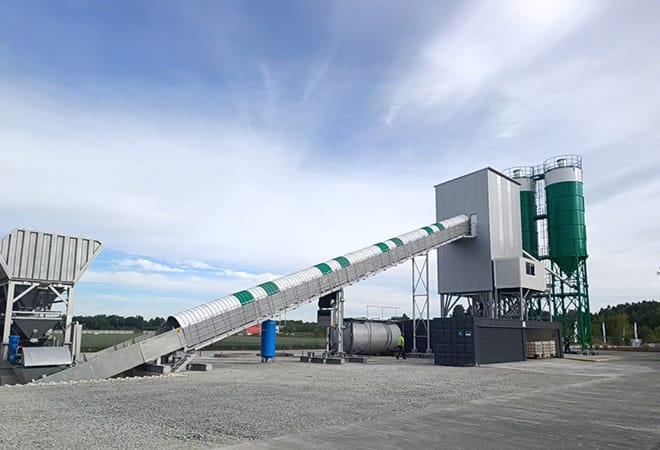
A belt conveyor is a mechanical device that employs a drive unit to continuously operate a conveyor belt, thereby achieving the automated transport of materials. Its primary components include the conveyor belt, drive unit, idlers, tensioning device, and frame.
This system is suitable for conveying various bulk or lump materials such as ore, coal, crushed stone, sand, aggregates, and cement clinker. It finds extensive application in mines, sand and gravel aggregate production lines, concrete batching plants, and construction sites.
Within Runhang’s integrated solutions, belt conveyors are typically systematically matched with crushing equipment, screening systems, storage silos, and mixing systems to ensure the entire production line operates efficiently, stably, and smoothly.

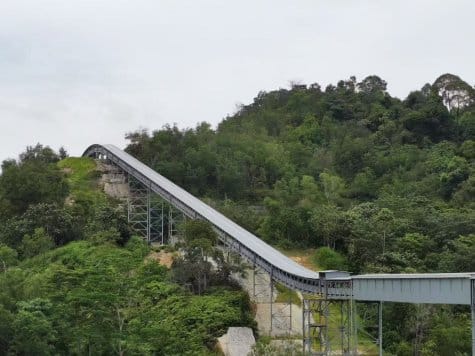
In mining operations, substantial quantities of raw ore must be conveyed from extraction points to crushing, screening, or processing areas. Belt conveyors facilitate prolonged, uninterrupted operation, significantly enhancing transport efficiency while preventing production disruptions caused by loading/unloading or vehicle scheduling.
Mining environments often feature intricate topography, including steep slopes, deep pits, or subterranean tunnels. Belt conveyors can be engineered as horizontal, inclined, or curved systems to suit operational requirements, flexibly accommodating challenging terrain and facilitating efficient connections from underground to surface, and from extraction sites to processing facilities.
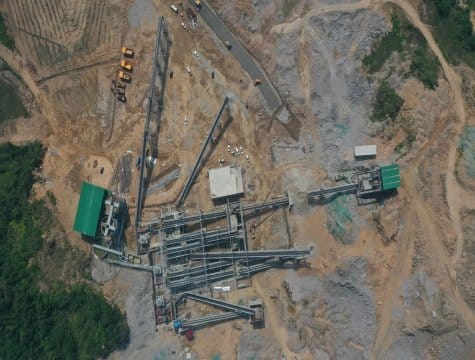
In modern open-pit mines and large-scale operations, belt conveyors typically form integrated continuous production lines alongside crushers, screening equipment, and stockpiling systems. This reduces intermediate processes, elevating overall system automation levels and operational stability.
Compared to traditional truck haulage, conveyor belt systems consume less energy and require reduced labour dependency, offering long-term operational cost advantages. They simultaneously decrease fuel consumption and exhaust emissions, aligning more closely with the development trend of green mining.

In applications such as aggregate processing, concrete batching plants, and sand and gravel yards, belt conveyors similarly play a pivotal role:
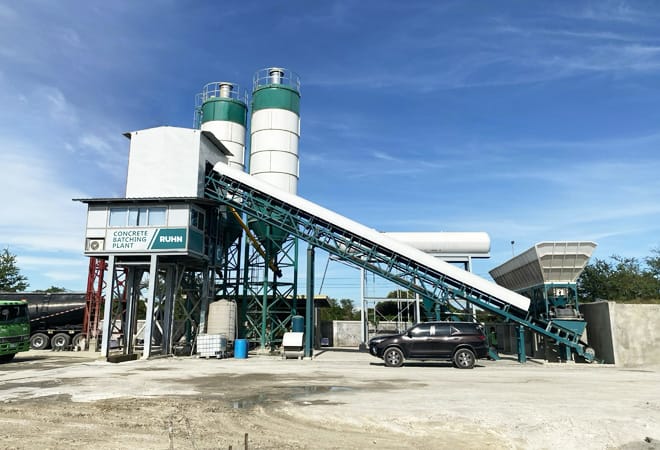
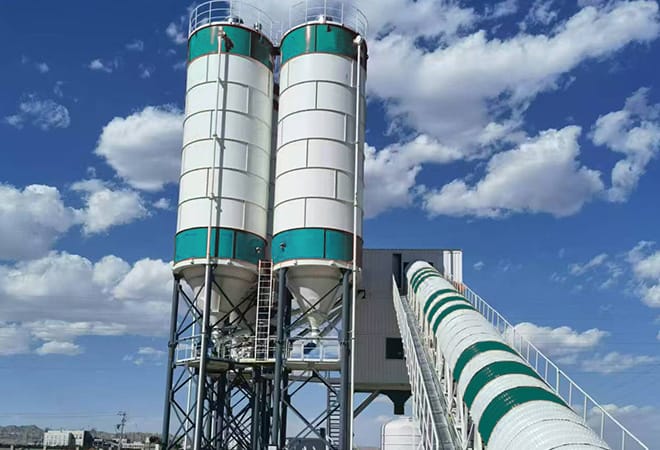
Within aggregate production lines, sand and gravel yards, and concrete batching plants, belt conveyors efficiently transport crushed and screened materials to storage silos or production equipment, ensuring a continuous and stable material supply.
By integrating with weighing systems, automated control systems, and production management systems, conveyor belts enable precise material handling and automated scheduling. This significantly reduces manual intervention, boosting production efficiency and enhancing the consistency of finished product quality.
Conveyor belts can be flexibly arranged according to site conditions, minimising the need for construction vehicle traffic and reducing the risk of on-site congestion. They are particularly well-suited for construction environments with limited space or high-intensity operations.
Meets the demands of large-scale mining and construction projects for high throughput and continuous material transfer.
Relatively simple structure, low failure rate, and outstanding long-term economic efficiency.
Can be custom-designed for varying operational conditions to fulfil diverse project requirements.
Reduces manual handling and vehicle transport, effectively mitigating safety risks and environmental impact.
Having understood the role of belt conveyors in mining and construction, selecting the appropriate conveying system for specific projects remains crucial. In practical applications, factors such as material properties, conveying capacity, distance, inclination angle, and site layout directly influence the operational efficiency and long-term running costs of the conveying system.
Drawing upon Runhang’s practical experience in mining crushing production lines and concrete batching plant projects, the selection of conveying systems must consistently align with the overall process flow and project requirements. A well-designed conveying solution not only enhances the operational efficiency of the entire production line but also effectively reduces equipment failure rates and maintenance costs.
For more detailed selection principles and key technical considerations, please refer to How to Choose the Right Belt Conveyor for Your Project.

Although belt conveyors offer excellent reliability, regular maintenance remains crucial under high-load, prolonged operating conditions:
Within Runhang’s project services, we routinely provide clients with equipment usage and maintenance recommendations to extend service life and reduce unplanned stoppages.
Within the mining and construction sectors, belt conveyors serve not merely as material handling equipment but as critical infrastructure ensuring production efficiency and system stability. Through scientific system design, appropriate selection, and standardised maintenance, conveying systems deliver long-term, stable value to projects.
Leveraging extensive expertise in crushing and screening systems, concrete batching plants, and plant engineering, Runhang is committed to providing reliable, efficient, and sustainable conveying system solutions for clients worldwide.