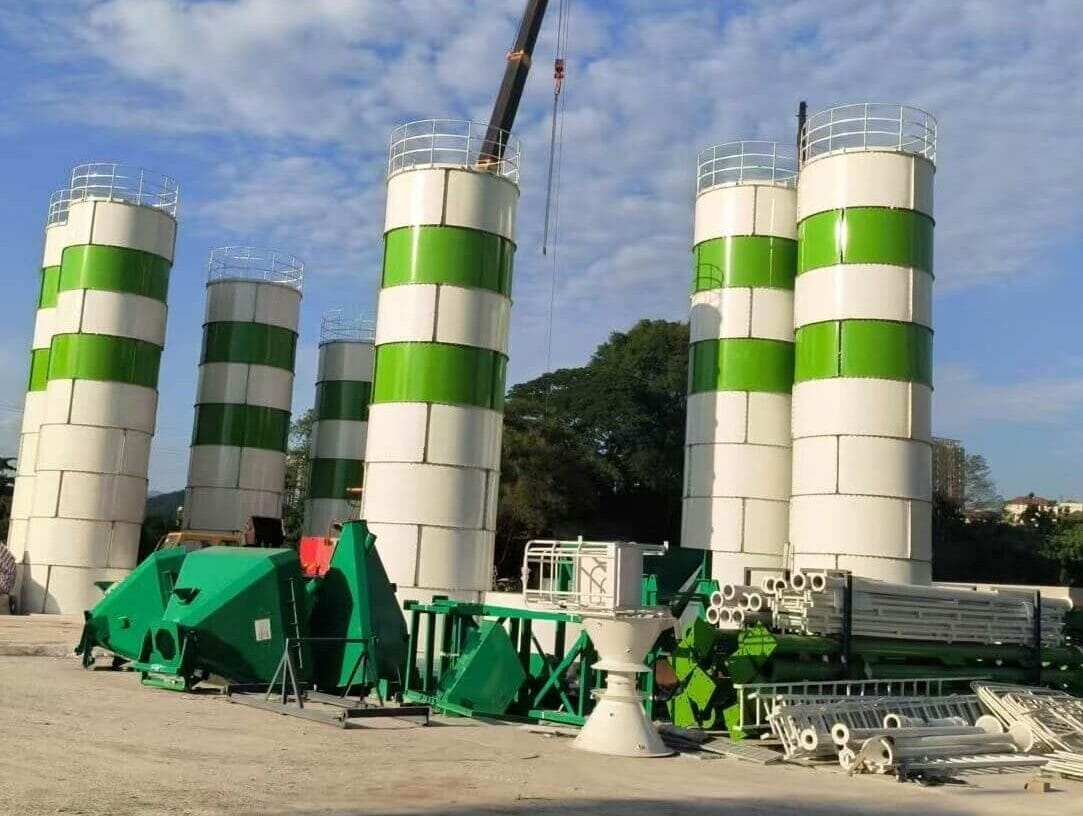
Energy consumption is an important operating cost for concrete batching plants. Equipment such as concrete mixers, belt conveyors, screw conveyors, air compressors, dust collectors, water pumps, and control systems may operate for many hours during daily production.
Reducing energy consumption does not necessarily require replacing the entire plant or installing expensive equipment. In many cases, better equipment management, optimized production processes, preventive maintenance, and reduced idle running time can significantly improve energy efficiency.
For concrete producers and project operators, an energy-efficient batching plant can help control operating costs while supporting more sustainable production.
A concrete batching plant uses electricity throughout the production process.
Typical energy-consuming equipment includes:
The actual energy consumption depends on plant capacity, equipment configuration, production volume, material characteristics, operating conditions, and production management.
Therefore, reducing energy consumption should start with identifying where energy is being used and which operating conditions are causing unnecessary consumption.
Equipment selection has a direct influence on the long-term energy consumption of a batching plant.
When selecting major equipment, consider not only the initial purchase price but also:
For example, selecting a mixer with an appropriate capacity for the required production volume can help avoid operating oversized equipment under inefficient conditions.
The same principle applies to conveyors, screw conveyors, pumps, compressors, and other auxiliary equipment.
Equipment should be selected according to the actual production requirements rather than simply choosing the largest available model.
Related Reading: [How to Choose the Right Concrete Batching Plant Capacity for Your Project]
One of the simplest ways to reduce electricity consumption is to avoid running equipment when production is not required.
During operation, equipment may continue running while:
For example, continuously running conveyors or mixers during extended waiting periods consumes electricity without producing concrete.
A practical operating strategy is to coordinate equipment startup and shutdown according to the actual production sequence.
Automatic control systems can also help operators manage equipment more efficiently by reducing unnecessary running time.
The mixer is one of the key pieces of equipment in a concrete batching plant and can have significant energy demand.
Mixer efficiency can be improved by:
Overmixing does not necessarily improve concrete quality. If the required mixing time has already been achieved, continuing to operate the mixer increases energy consumption without providing a corresponding production benefit.
At the same time, excessive material buildup inside the mixer can increase resistance and affect mixing efficiency.
Related Reading: [Common Concrete Mixer Problems and Solutions: Troubleshooting and Maintenance Guide]
Conveying systems are another important part of the plant’s energy consumption.
Belt conveyors and screw conveyors should operate at suitable loads and speeds.
Energy efficiency can be improved by:
A poorly maintained conveyor may require more energy because of increased friction, misalignment, damaged bearings, or material accumulation.
Regular inspection can therefore improve both energy efficiency and equipment reliability.
Related Reading: [How to Choose the Right Belt Conveyor for Your Project]
Electric motors are widely used throughout a batching plant.
Motor efficiency can be affected by:
Regular inspection and maintenance can help motors operate closer to their intended working conditions.
Bearings, couplings, gearboxes, belts, and other transmission components should also be inspected according to the equipment manufacturer’s recommendations.
Reducing mechanical resistance can help improve overall equipment efficiency.
Pneumatic systems are commonly used for equipment such as pneumatic valves and gates.
Air compressors can consume considerable electricity, particularly when compressed air leaks are present.
Common causes of unnecessary compressed-air consumption include:
Regularly checking air lines, valves, fittings, and hoses can help identify leaks.
The compressor pressure should also be set according to the actual requirements of the pneumatic system rather than being unnecessarily high.
Dust collection systems are important for controlling dust generated during cement and aggregate handling.
However, dust collectors also consume electricity through fans and related equipment.
To maintain efficient operation:
A poorly maintained filter can increase system resistance and make the fan work harder.
At the same time, dust collection should not simply be reduced to save electricity. The system needs to operate according to environmental and occupational requirements.
Material spillage can indirectly increase energy consumption.
For example, spilled aggregate may require additional loader operation, manual cleaning, or repeated material handling.
Spillage can be reduced by:
Reducing spillage can therefore improve material utilization while also reducing unnecessary equipment operation.
Production scheduling can have a significant influence on energy efficiency.
Instead of frequently starting and stopping the entire plant for small production batches, operators can organize production according to project requirements and delivery schedules.
Better scheduling can help:
For ready-mix concrete operations, coordination between plant production and mixer truck dispatching is particularly important.
When concrete production, truck arrival, and material supply are properly coordinated, the plant can spend more time producing and less time waiting.
Modern batching plants can use control systems to monitor production and equipment operation.
An automated control system can help operators monitor:
Production data can also help identify unusual operating conditions.
For example, if a conveyor, mixer, or pump consistently requires more operating time than expected, this may indicate a maintenance problem or an inefficient production process.
Energy monitoring equipment can provide additional information about electricity consumption and help operators identify areas for improvement.
Preventive maintenance is closely related to energy efficiency.
A poorly maintained plant may consume more energy because components operate with increased friction, resistance, or mechanical load.
Regular maintenance should include:
Cleaning is also important. Accumulated concrete, aggregate, dust, and other materials can interfere with equipment operation and increase resistance.
Related Reading: [Concrete Batching Plant Maintenance Checklist: Daily, Weekly, and Monthly Tasks]
Energy savings are not limited to major production equipment.
Lighting, office equipment, ventilation, water pumps, and other auxiliary systems also contribute to total electricity consumption.
Possible improvements include:
Although the energy consumption of individual auxiliary systems may be relatively small, reducing unnecessary operation across the entire plant can provide additional savings over time.
Energy efficiency should also be considered when planning a new batching plant.
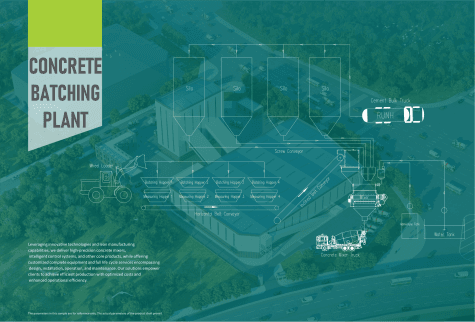
A well-planned layout can reduce unnecessary material transportation distances and simplify equipment connections.
For example:
Aggregate Storage → Batching → Conveying → Mixing → Discharge
should follow a logical flow.
Cement silos should also be positioned to provide a practical route for screw conveyors, while truck traffic should be organized to minimize unnecessary movement and waiting.
Layout planning should balance material flow, equipment accessibility, vehicle movement, maintenance requirements, and energy efficiency.
Related Reading: [Concrete Batching Plant Layout Design: Key Factors for Efficient Operation]
Before implementing an energy-efficiency program, operators can review the following checklist:
| Area | Energy-Saving Action |
| Mixer | Avoid unnecessary empty running and excessive mixing time |
| Conveyors | Prevent misalignment, friction, and unnecessary operation |
| Motors | Inspect motors and transmission components regularly |
| Compressor | Check for air leaks and excessive pressure |
| Dust collector | Maintain filters and fans properly |
| Production | Reduce idle time and unnecessary startup/shutdown |
| Maintenance | Keep equipment clean and properly lubricated |
| Automation | Monitor equipment status and production data |
| Lighting | Switch off unnecessary lighting |
| Layout | Minimize unnecessary material and vehicle movement |
Reducing energy consumption in a concrete batching plant is not based on a single piece of equipment or one technical upgrade. It is a combination of efficient equipment selection, optimized production, preventive maintenance, reduced idle operation, effective automation, and proper plant layout.
The most practical approach is to first identify where electricity is being consumed, then determine which operating conditions create unnecessary energy use. Improvements can then be introduced step by step.
For new projects, energy efficiency should be considered during equipment selection and plant layout design. For existing plants, regular inspection, maintenance, production monitoring, and operational optimization can provide practical opportunities to reduce energy consumption.
Runhang provides concrete batching plant equipment and customized solutions for different project requirements. With appropriate equipment selection and efficient plant management, concrete producers can work toward more efficient and reliable plant operation.