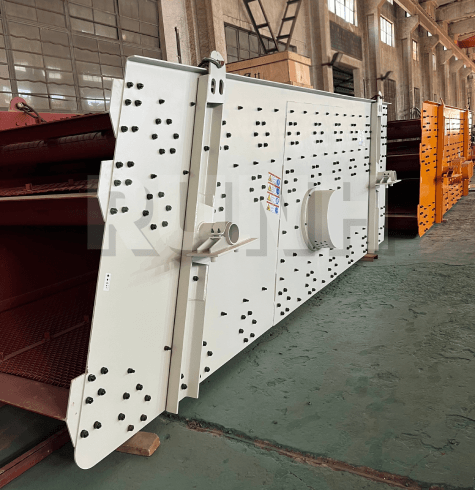
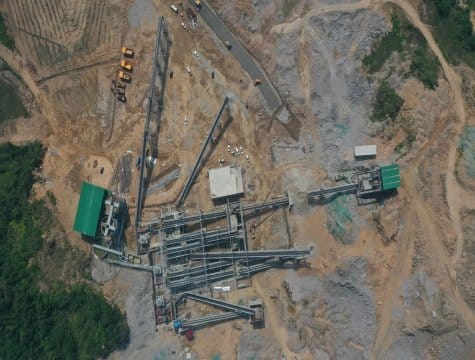
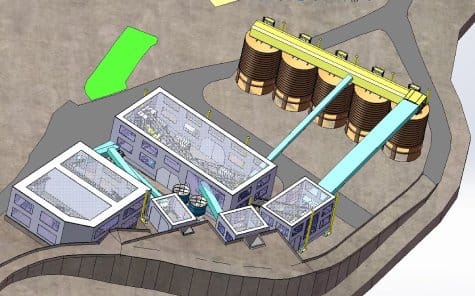
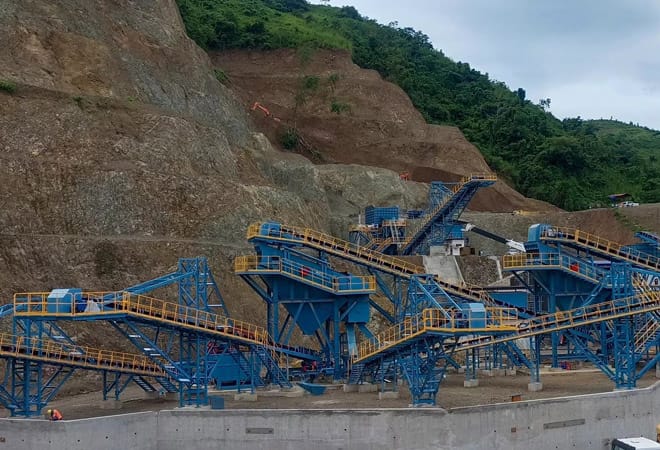
In mining operations, aggregate production lines, and crushing and screening systems, vibrating screens serve as the core equipment for material classification. Instability in vibrating screen operation not only reduces screening efficiency but can also accelerate equipment wear, increase downtime for maintenance, and even disrupt the continuous operation of the entire production line.
In multiple Runhang engineering projects, we have observed that most issues stem not from inherent equipment defects, but from multifaceted factors including material properties, operating parameters, installation precision, and maintenance management. This article systematically analyzes common problems and viable engineering solutions, starting from typical failure scenarios.
Large amounts of fine material entering the return cycle or wasting inventory
Possible Causes
Uneven feeding or momentary overload
Screen mesh size and number of layers mismatched with the material
Amplitude and frequency are not optimized for the actual material
High moisture content in the material is causing clogged apertures
Solutions
Uniform Feeding — Use vibrating feeders to ensure stable flow rates.
Optimal Screen Selection — Set appropriate aperture sizes and number of layers based on particle size distribution;
Adjust Vibration Parameters — Fine-tune amplitude and frequency to the material’s optimal operating range;
Anti-Blocking Measures — Employ anti-blocking screens or cleaning devices for high-moisture materials.
2. Severe Clogging of the Screen
Common Manifestations
Screen openings become covered with fine particles, sludge, or wet material, reducing the effective screening area. This prevents undersized material from passing through the screen, leading to reduced output.
Possible Causes
High proportion of fine particles, coupled with moist or highly viscous material
Screen aperture design is unsuitable for current material characteristics
Insufficient self-cleaning capability of the screen surface
Solutions
Increase vibration frequency or amplitude to dislodge material from screen openings
Replace with anti-clogging or optimized-pore screen material (rubber/polyurethane)
Install vibrating balls or spring-loaded screen-cleaning devices beneath the screen surface
Control material moisture content or implement pre-drying treatment
3. Abnormal or Unstable Vibration of the Vibrating Screen
Typical Manifestations
Uneven equipment vibration
Oscillation, sudden stops, or intermittent vibration
Common Causes
Vibrator imbalance or damage
Eccentric weights misaligned
Loose anchor bolts or unstable foundation
Spring fatigue, suspension component deterioration
Solutions
Check and adjust the consistency of the eccentric block angles on both left and right exciters
Periodically tighten anchor bolts and foundation bases
Replace aged springs, buffers, and vibration-damping devices
Inspect and clean vibration motor bearings and fasteners
Note: Since vibrating screens are “mechanical resonant systems,” unstable vibration often accelerates damage to other components. Therefore, troubleshooting should be conducted promptly.
4. Screen Mesh and Screen Box Wear Excessively Fast
Possible Causes
High hardness and sharp edges of raw materials
Concentrated feed drop points are causing excessive localized impact
Insufficient screen surface support or vibration isolation
Improvement Measures
Use more wear-resistant screen mesh (high-manganese steel/polyurethane/composite materials)
Distribute material evenly to avoid localized impact
Add cushioning liners, wear strips, and reinforced vibration isolation components
5. Throughput Below Design Capacity
Performance
Actual TPH is significantly below the theoretical design
Large fluctuations in production capacity
Common Causes
Insufficient screen area or improper layer configuration
Uneven feeding or material blockage
Inefficient system process configuration (excessive material recirculation)
Optimization Solutions
Evaluate whether to increase the screen area or adjust the screen layer count
Configure a rational feeding system (vibrating feeder + buffer device)
Redesign the screening process to reduce excessive recirculation
6. High Noise and Unstable Operation of Vibrating Screen
Common Symptoms
Operating noise exceeds normal levels
Abnormal resonance occurs in the machine body
Underlying Causes
Loose fasteners
Insufficient bearing lubrication or wear
Failed spring suspension
Improvement Measures
Regularly inspect the tightness of anchor bolts and connecting components
Periodically replenish bearing grease and replace aged springs
Replace worn bearings and failed suspension springs
Install vibration isolation pads on foundations and supports
7. Excessive Vibration and Wear Issues (Advanced Fault)
This condition commonly occurs under continuous heavy loads where the vibrational energy is mismatched with the screening process.
Typical Manifestations
Cracks in screen frames and welds
Frequent spring breakage
Structural fatigue in the machine body
Resolution Approach
During operational design, ensure:
Matching of excitation parameters (frequency/amplitude) with load conditions
Enhanced structural rigidity and stress distribution design for the screen box
Implementation of fatigue life optimization design
8. Deviant Screening and Unstable Product Gradation
Causes
Improper selection of screen mesh size
Uneven material feeding distribution
Poor interlayer transmission
Solutions
Re-evaluate the screen mesh size design
Improve distribution uniformity on the screen through multi-point feeding
Adjust interlayer spacing and angle to optimize gradation separation
9. Frequent Shutdown and Maintenance, Affecting Production Continuity
Common Causes
Timely replacement of wearing parts was not carried out
No preventive maintenance plan
Lack of real-time operation monitoring
Solutions
Establish regular inspection plans
Implement spare parts inventory management
Adopt an online monitoring system for early warning of vibration, temperature and other indicators
Conclusion
A vibrating screen is one of the core pieces of equipment in the crushing and screening system. Its operating status directly determines screening efficiency, production stability, and operating costs. Most problems are not caused by equipment defects, but by incomplete matching of design, installation, operating parameters, and maintenance strategies with actual working conditions.
Combined with engineering practice and systematic optimization strategies, Runhang provides more stable, efficient, and easy-to-maintain vibrating screens and integrated screening solutions for mining, aggregate, and concrete production lines.