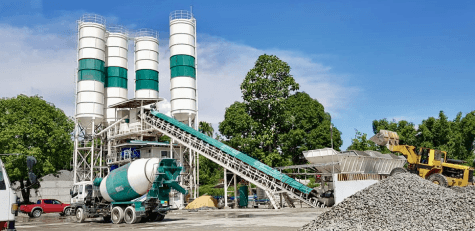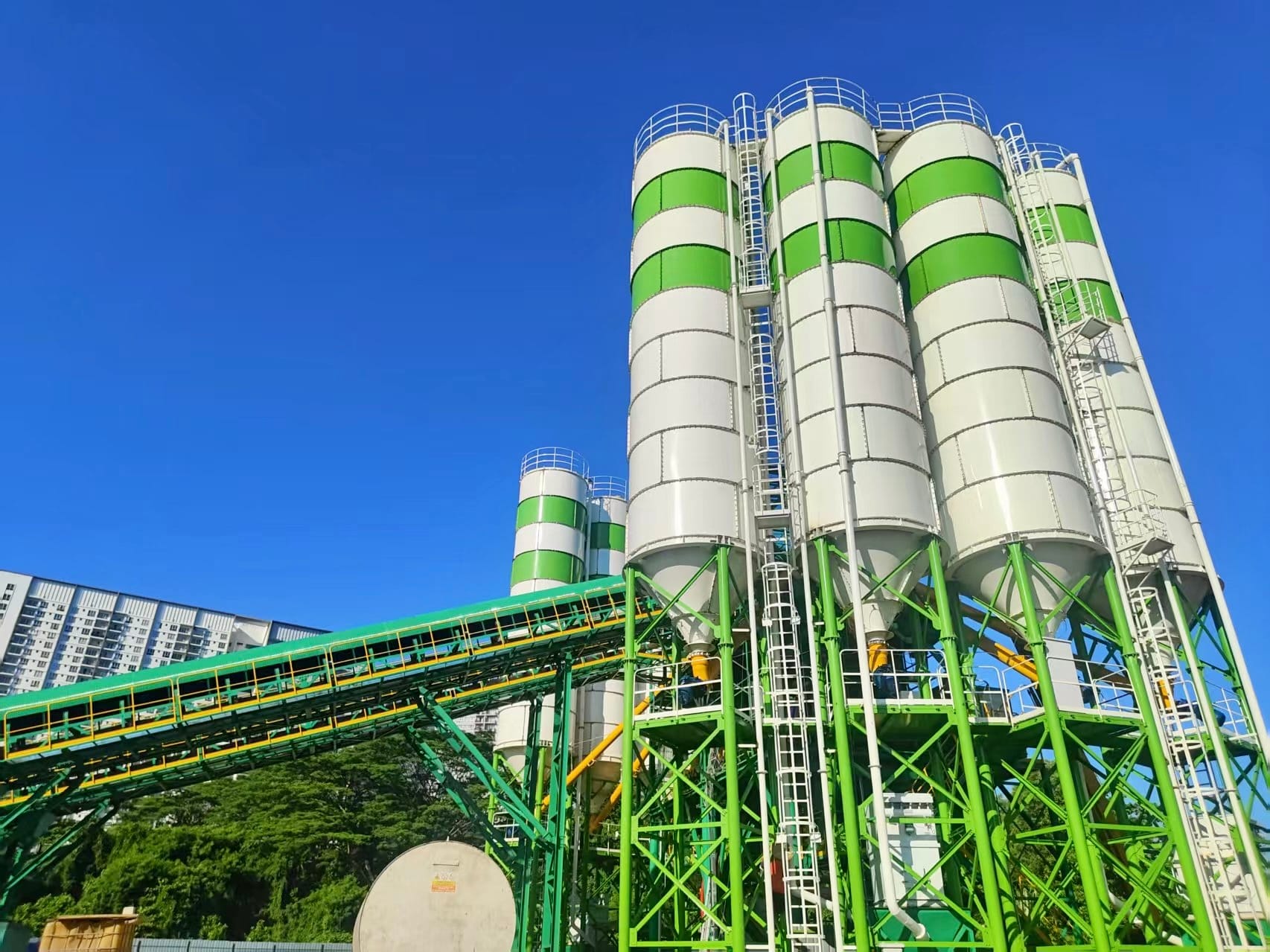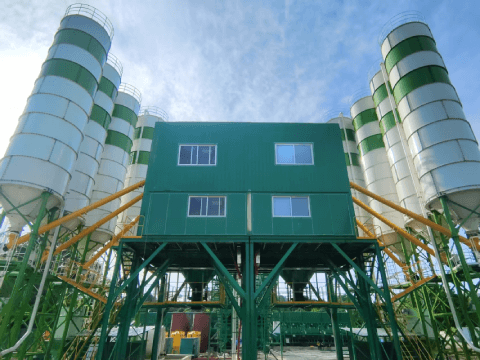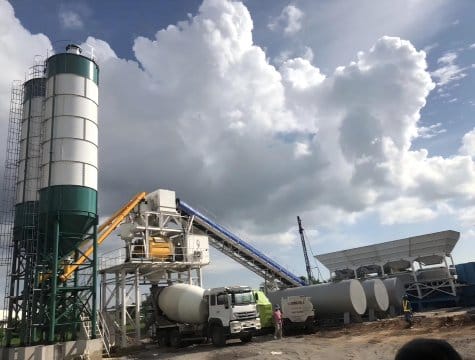
In the daily operation of concrete batching plants, material waste is often regarded as an “unavoidable” issue. However, from a long-term operational perspective, the loss of aggregates, cement, powdered materials, and admixtures directly inflates production costs and diminishes overall profitability.
In practice across multiple concrete batching plant projects at Runhang, it has been observed that the majority of material wastage does not stem from issues with individual equipment, but rather results from a combination of factors in the measurement, conveying, feeding, and management processes. Through systematic optimisation, material losses can be significantly reduced even without expanding production capacity.
The quality of concrete and the efficiency of resource utilisation depend largely on the precision of ingredient measurement.
Inaccurate measurement not only leads to excessive raw material consumption but may also compromise concrete quality, increasing the risk of rework or wastage.
Key measures to reduce measurement wastage include:
Precise metering control is the first step in reducing material wastage.
In many batching plants, aggregate wastage frequently occurs during conveyance and storage, rather than during the mixing process itself.
Frequently asked questions include:
By optimising the aggregate bin structure, belt conveyor system, and anti-spillage design, ineffective losses can be effectively minimised. Concurrently, real-time monitoring of aggregate moisture content facilitates more precise control over actual feed rates.
Cement, fly ash, and other powdered materials are highly prone to wastage during conveyance and discharge if improperly managed.
Effective control measures include:
In the design of Runhang’s batching plant systems, powder material conveyance and metering consistently prioritise the minimisation of material spillage and residue as one of their core objectives.
Concrete residue represents a hidden waste that many mixing plants have long overlooked.
The primary sources include:
By rationally organising production schedules, minimising frequent changes in formulation ratios, and implementing recovery or reuse systems, this portion of wastage can be significantly reduced.
Equipment instability frequently leads to material interruptions, repeated feeding, or entire batches being scrapped.
To minimise waste caused by equipment issues, focus should be placed on:
Stable equipment operation is a crucial safeguard for minimising material wastage.
Beyond the equipment and structures themselves, human operation and management practices also exert a direct influence on material wastage.
Effective management measures include:
When waste is quantified and continuously monitored, the improvements achieved are often more pronounced.
Material wastage in concrete batching plants is not an unavoidable cost, but rather a variable that can be progressively reduced through systematic design and meticulous management.
By enhancing metering precision, optimising conveying and storage systems, minimising residual and recycled materials, improving equipment stability, and strengthening operational management, batching plants can achieve higher material utilisation and lower operating costs without increasing production capacity.
Drawing upon extensive engineering expertise, Runhang delivers comprehensive solutions for concrete batching plant projects that are more efficient, stable, and easier to maintain. This empowers clients to achieve long-term, sustainable production operations.