When investing in aggregate or mining projects, the cost structure of crushing and screening production lines is a key concern for clients. Many investors focus solely on equipment quotations, overlooking installation, civil engineering, and long-term operating costs.
In reality, a comprehensive investment in a crushing production line should involve a systematic evaluation across three dimensions: equipment costs, installation costs, and operational costs.
This article provides a comprehensive breakdown of crushing line cost components from an engineering practice perspective, helping investors develop more scientifically sound budget planning.
Equipment costs typically account for 50%–70% of total investment, primarily including:
Equipment model and processing capacity directly determine pricing. During the initial selection phase, refer to our previous article “How to Design an Efficient Crushing and Screening Plant” to match processes, avoiding over-specification or capacity imbalances.
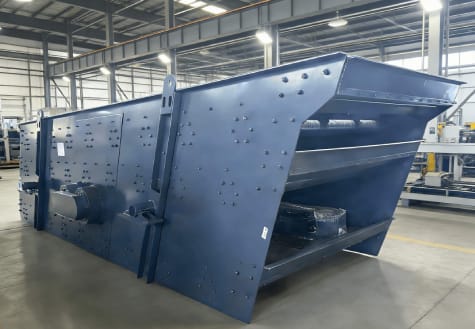
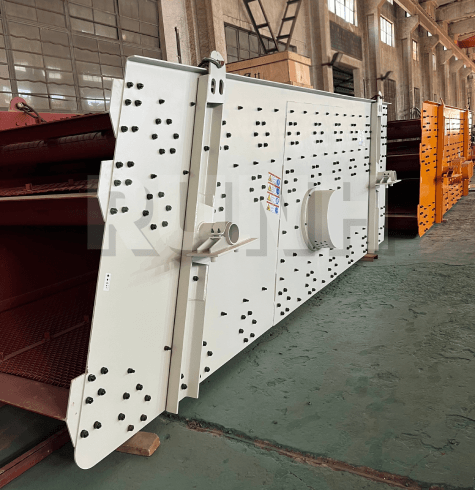
Insufficient screening efficiency not only compromises product quality but also increases energy consumption and operational costs. For reference: How to Choose a Vibrating Screen for a Crushing Plant

| Equipment Type | Key Factors Affecting Cost | Recommendations: |
| Crusher | Production Capacity (TPH) & Crushing Ratio | Select equipment based on rock hardness |
| Screener | Number of Screening Layers & Area | Ensure finished product specifications are pure to increase product value |
| Conveyor | Conveying Distance & Belt Width | High-quality belts reduce misalignment and spillage losses |
Many project budgets fall short due to underestimating this expense category, which typically accounts for 15%-25% of total investment.
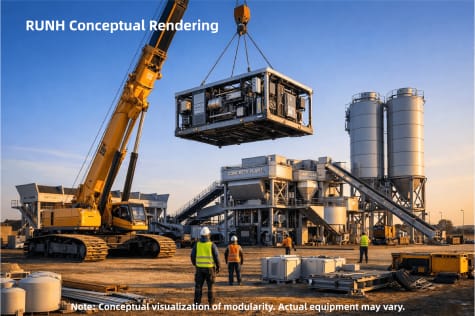
Adopting a modular design can effectively shorten installation cycles and reduce labor costs. For more on the advantages of modularity, see: Modular Design: The Future of Installation and Dismantling in Construction Equipment
For export projects, transportation costs cannot be overlooked:
Modular design enhances container loading efficiency and reduces logistics risks.

In the long term, operating costs have a greater impact on investment returns.
The primary power-consuming equipment consists of the crushing main unit and screening system. In areas with unstable power supply, fuel costs for high-power diesel generators require careful calculation.
Higher automation levels reduce labor expenses.
Equipment stability directly impacts unit production costs.
Scientific evaluation of unit costs facilitates optimization of equipment configuration plans.
In engineering practice, Runhang recommends reducing overall costs through the following measures:
The investment cost of a crushing production line encompasses not only equipment procurement but also installation, transportation, and long-term operational expenses. Only through holistic system planning can a higher return on investment be achieved.
As a comprehensive solution provider for plant-based projects, Runhang is committed to delivering efficient, stable, and sustainable crushing and screening system designs and delivery services to global clients.
If you are planning a new aggregate or mining project, we welcome you to consult with the Runhang team. We will provide professional cost assessments and optimization recommendations.