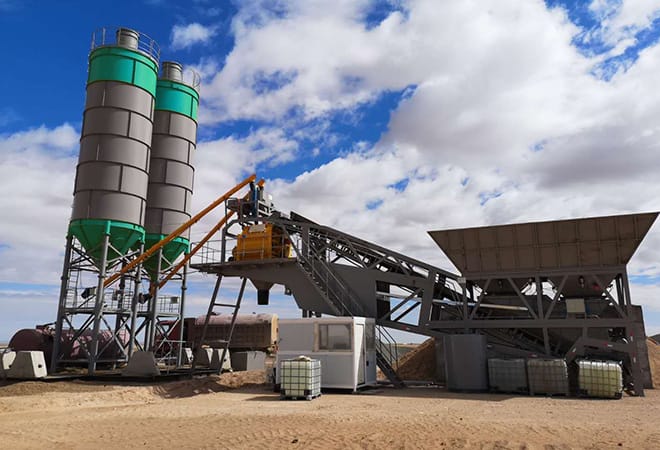
How to select the appropriate capacity for a cement silo?
In concrete batching plants or powder storage systems, selecting the capacity of a cement silo is not merely a matter of specifications, but rather a systematic process involving production requirements, logistics planning, cost control, and safety management.
If the capacity is chosen inappropriately, this may lead to:
Therefore, a comprehensive assessment must be carried out from multiple perspectives.
The fundamental purpose of cement silo capacity is to address a single issue:
👉 “How to ensure continuous production whilst avoiding waste of resources.”
General industry advice:
Capacity selection must be based on actual consumption:
👉 Silo capacity ≈ Daily consumption × Number of days’ stock
For example:
Daily consumption: 300 tonnes
Stock: 2 days
Recommended capacity: 600 tonnes
👉 The higher the production capacity, the greater the storage capacity required.
The supply cycle directly affects storage requirements:
Calculate total demand based on daily output, for example:
Daily output of 1,000 m³ of concrete → Requires approximately 250–350 tonnes of cement
👉 It is generally recommended that storage capacity meets 2–3 days’ production requirements
When the supply chain is unstable, safety stock must be increased. Otherwise, there is a risk of production stoppages
Requirements should be determined based on the batching plant’s production capacity.
For example:
Small batching plants (25–60 m³/h): Recommended 50–100 tonnes
Medium-sized batching plants (60–120 m³/h): Recommended 100–200 tonnes
Large-scale batching plant (120 m³/h and above): Recommended 200–500 tonnes
The higher the production capacity, the greater the storage capacity required.
Selection must take into account:
👉 Opting for a slightly larger capacity upfront is often more cost-effective than adding capacity later
Different powders have different properties:
👉 This directly affects capacity utilisation and actual operational performance
Factors to consider:
For example:
Limited space → Choose a horizontal silo
Long-term project → Choose a large vertical silo
Relationship between capacity and cost:
👉 The key is to find the ‘balance between investment and efficiency.’
Single-silo solution:
Multi-silo solution (recommended):
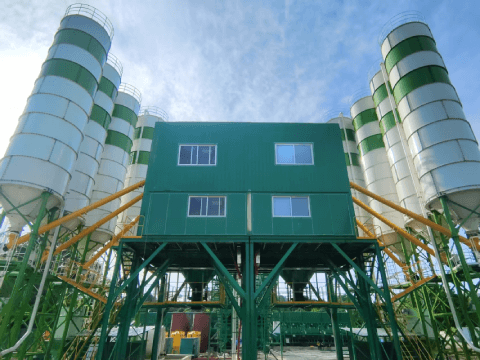
👉 In actual engineering practice, large-scale projects typically adopt a multi-silo configuration. Runhang cement silos offer a range of specifications and support customised capacity solutions, suitable for projects of varying scales.
A compliant silo is not merely one with “sufficient capacity”; it must also be equipped with:
Failure to do so may result in serious safety incidents
❌ Insufficient capacity:
Frequent replenishment
Impacts production efficiency
❌ Excessive capacity:
Increased costs
Low utilisation rate
❌ Neglecting future expansion:
Difficulties with subsequent expansion
We recommend allowing for some expansion space.
❌ Ignoring environmental factors:
Humidity, temperature, and wind loads all affect performance
❌ Failing to consider system compatibility:
Incompatibility with conveying and mixing systems
As a specialist engineering equipment manufacturer, Runhang advises clients to:
Runhang offers cement silos in multiple specifications (50–500 tonnes+) and supports customised solutions to meet diverse project requirements.

Once capacity has been determined, the following aspects require attention:
👉 Recommended reading: Cement Silo Installation and Safety Guide
The capacity of the cement silo must be compatible with the overall system:
The larger the capacity:
👉 Recommended reading: Concrete Batching Plant Price Guide: What Affects the Cost
Selecting the capacity of a cement silo is a systematic process that requires careful consideration of:
Through scientific calculations and sound planning, it is possible to achieve:
As a specialist manufacturer of construction machinery, Runhang offers cement silos in a range of specifications and bespoke solutions to help customers achieve efficient and stable production operations.