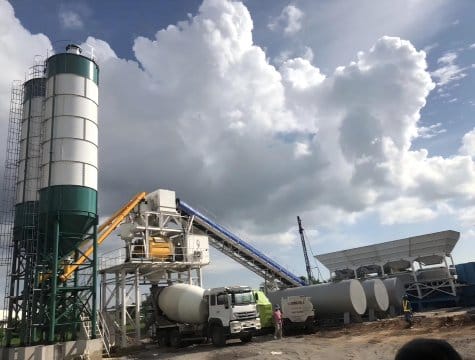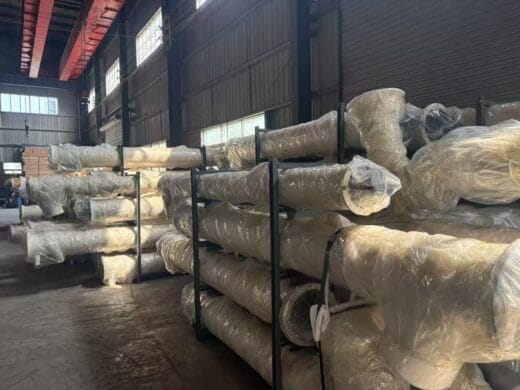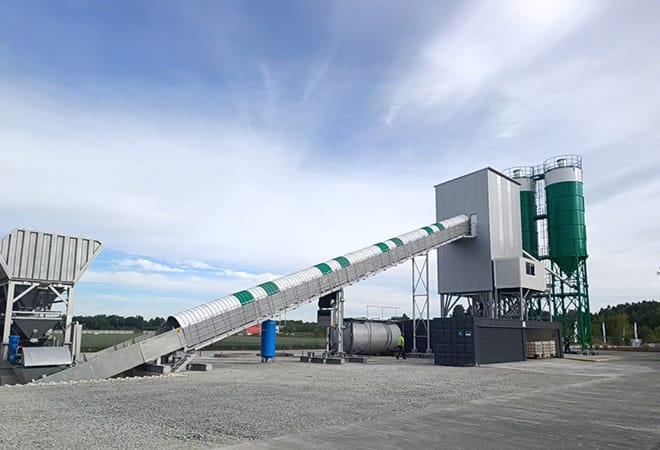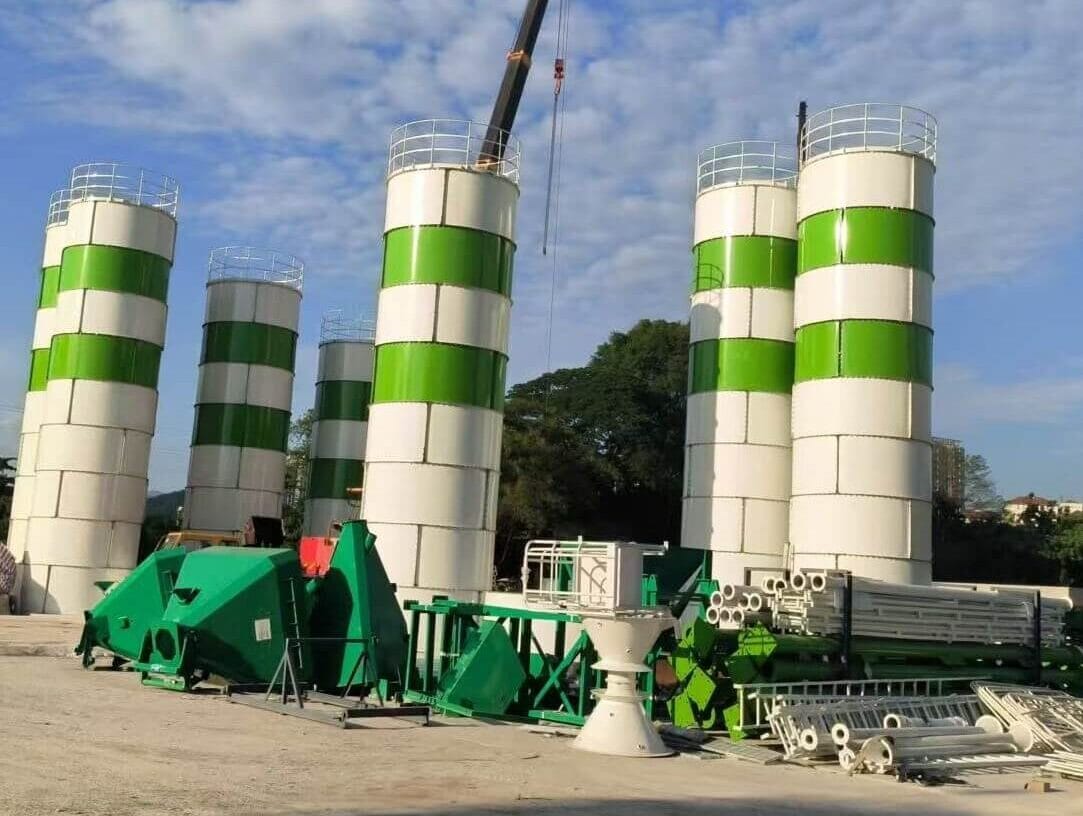
In concrete batching plants, dry-mixed mortar production lines, and powder conveying systems, screw conveyors are a vital piece of material handling equipment. They are primarily used to convey powdered or granular materials such as cement and fly ash, and offer the following advantages:
They are widely used in the construction, mining, chemical, and environmental protection industries.
A screw conveyor is a type of conveying equipment that uses rotating screw blades to move material forward.
It operates on the principle of the Archimedes screw:
👉 As the screw shaft rotates, the blades propel the material continuously in the direction of conveyance.
Depending on their design, screw conveyors can be used for:
They are particularly suitable for powdery, granular, and small lumpy materials.
A complete screw conveyor typically comprises:
1️⃣ Screw flight
The core component is used to propel the material.
2️⃣ Shaft
Connects the flights and transmits power.
3️⃣ Conveyor trough or pipe
These are typically classified as:
Used to contain and convey material.
4️⃣ Drive unit
Comprising:
Responsible for driving the screw shaft rotation.
5️⃣ Bearings and support system
Ensure stable equipment operation and reduce friction.
6️⃣ Inlet and outlet
Control the entry and discharge of material.
The operating principle of a screw conveyor is relatively simple, but it involves the principle of continuous mechanical propulsion.
The motor drives the screw shaft to rotate→ The screw blades propel the material forward
→The material moves continuously along the conveying pipe to the discharge outlet
This process is similar to the principle of ‘screw propulsion’.
Workflow:
1️⃣ Material enters the feed inlet
Powdered or granular material enters the equipment through the feed inlet.
2️⃣ The motor drives the screw shaft to rotate
Once the drive system is activated:
3️⃣ The screw blades propel the material forward
As the blades rotate:
This principle is similar to:
4️⃣ Material is discharged from the outlet
It is ultimately conveyed to the target equipment or storage system.
1️⃣ Excellent sealing performance:
Compared to belt conveyors:
Particularly suitable for conveying powdered materials such as cement.
2️⃣ Stable continuous conveying
Screw conveyors can achieve:
This is of great importance for concrete batching plants.
3️⃣ Compact design
It has a small footprint:
Suitable for areas with limited space
4️⃣ Relatively simple maintenance
Maintenance tasks primarily include:
For example, the Runhang screw conveyor features a wear-resistant design and a stable drive system, which effectively reduces maintenance costs.
1️⃣ Tubular screw conveyor
Features:
Most commonly found in mixing plants.
2️⃣ U-trough screw conveyor
Features:
Suitable for granular or lumpy materials
3️⃣ Horizontal and inclined screw conveyors
Depending on the installation method:
The greater the angle of inclination:
In a concrete batching plant:
Screw conveyors are typically connected to:
Their primary functions include:
They are therefore a vital component of the plant’s powder handling system.
👉 Further reading: Cement Silo Installation and Safety Guide
1️⃣ Conveyor angle
An increase in the angle of inclination will result in:
2️⃣ Material properties:
Different materials:
All affect the conveying performance.
3️⃣ Speed design
If the speed is too low:
If the speed is too high:
It is therefore necessary to select an appropriate speed.
4️⃣ Blade design
Different blade types:
Suitable for different operating conditions.
| Problem | Causes | Solutions |
| Blockage | Damp material | Keep dry |
| Low conveying efficiency | Inappropriate rotational speed | Adjust the drive system |
| Abnormal noise | Worn bearings | Replace the bearings |
| Dust leakage | Damaged seals | Check the seals |
| Blade wear | Prolonged operation under high loads | Replace the wear-resistant blades |
When selecting a model, the following factors should be taken into account:
👉 Large-scale batching plants typically require higher conveying capacity and greater wear resistance.
👉 Recommended reading: How to Choose Cement Silo Capacity
To ensure long-term, stable operation, you should:
Regular maintenance can significantly extend the service life of equipment.
A screw conveyor is a highly efficient, reliable, and environmentally friendly piece of equipment for conveying powdered materials, and it plays a vital role in concrete batching plants.
Through appropriate selection and proper maintenance, the following can be achieved:
✔ Stable and continuous conveying
✔ Reduced operating costs
✔ Improved production efficiency
✔ Reduced dust pollution
As a specialist manufacturer of construction machinery, Runhanng offers high-performance screw conveyors and comprehensive material handling solutions to meet the requirements of various engineering projects.