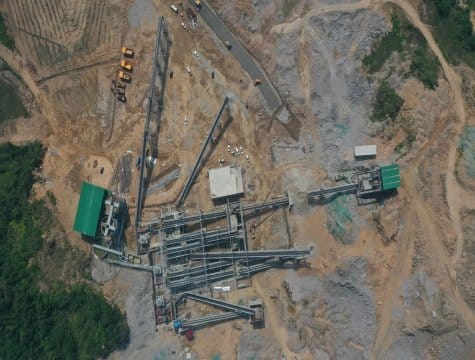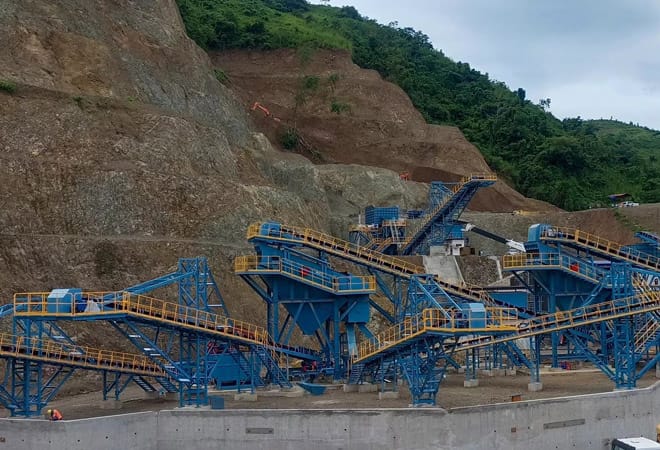
In mining operations and aggregate production, output serves as a crucial metric for assessing production line efficiency. However, expanding equipment and occupying additional land often entails high costs and lengthy construction periods. For numerous projects, optimising existing crushing production lines offers a significantly more cost-effective pathway to enhance output substantially.
As a specialist manufacturer providing comprehensive crushing plant solutions, Runhang has enabled clients to increase output within existing system constraints through detailed optimisation, process improvements, and equipment fine-tuning across multiple engineering projects. This article will explain how this objective is achieved from the perspectives of process, equipment, and operational management.
The primary factor in enhancing production capacity is stable and uniform feeding. Crushers experience significant efficiency reductions under fluctuating loads, which may also lead to material blockages and equipment damage.
A stable feeding rhythm ensures that the crusher operates within the optimal load range, which is highly consistent with the principle of matching equipment to materials emphasized in How to Choose the Right Crusher Type for Different Materials.
Without altering the number of primary pieces of equipment, rational adjustments to the crushing process can also significantly increase throughput:
A rational process flow facilitates the continuous passage of materials through successive crushing and screening units, thereby fundamentally enhancing efficiency.
Different crusher types exhibit significant efficiency variations based on parameter settings:
These parameter adjustments, while not altering the number of units, enhance material processing efficiency, thereby yielding increased output.
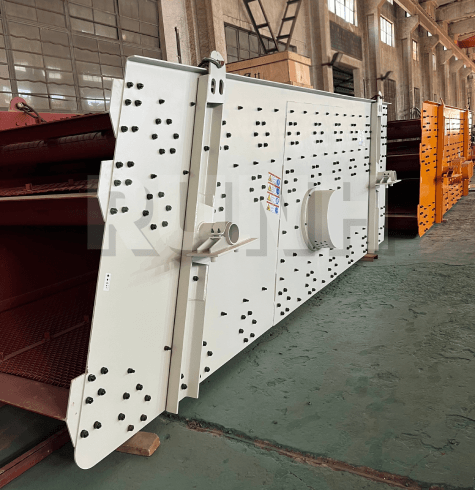
Screening is an indispensable step in boosting production output. Inefficient screening leads to increased material return, directly impacting the crusher’s load and throughput.
The rational configuration of screening systems aligns with the capacity-efficiency balancing approach outlined in How to Choose a Vibrating Screen for a Crushing Plant – Types, Capacity & Applications.

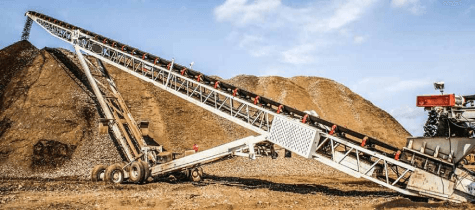
The conveying system, serving as the lifeblood of the crushing production line, significantly impacts overall efficiency:
A well-maintained conveying system sustains continuous operation across crushing and screening stages, preventing capacity reduction due to conveying bottlenecks.
Intelligent monitoring systems can help identify production bottlenecks promptly on-site and enable rapid adjustments:
By utilising automated regulation and monitoring systems, production efficiency can be continuously enhanced whilst ensuring safety and equipment longevity.
Equipment wear directly impacts operational efficiency and output stability:
Maintenance management not only extends equipment lifespan but also ensures production lines consistently operate at high performance levels.
Reasonable energy-saving and environmental protection measures are not merely compliance requirements; they also contribute to increased production:
In Runhang’s engineering practice, optimising auxiliary system units frequently yields unexpected gains in production capacity.
Increasing output without expanding production line scale is not achieved through isolated equipment adjustments, but rather through comprehensive optimisation of the entire process—from material intake to finished product dispatch. By implementing integrated measures such as stable feeding, rationalised processes, precise parameter adjustments, effective screening, unimpeded conveying, intelligent monitoring, and scientific maintenance, the processing capacity per unit time of crushing and screening systems can be significantly enhanced.
Should you require an assessment or consultancy service for a specific project’s production capacity optimisation plan, please do not hesitate to contact the Runhang Engineering and Technology Team. We can provide bespoke optimisation recommendations and implementation strategies tailored to your site conditions.